
On this page
- The 12 Best AI Courses at a Glance
- Which AI Course Path Fits Your Goal?
- Best AI Courses for Using AI at Work
- Best AI Courses for Understanding AI Without Coding
- Best AI Course for Managers and Business Leaders
- Best AI Certifications for Your Resume
- Best AI Courses for Learning to Build AI
- Are Free AI Courses Good Enough?
- Do AI Certificates Help You Get Hired?
- How Much Math and Coding Do You Need?
- Best AI Courses FAQs
- Where Should You Start?
The best AI courses in 2026 are Google AI Essentials for using AI at work, Elements of AI for understanding it for free, and Andrew Ng’s Machine Learning Specialization for building it yourself. Which one fits you depends less on the course and more on your goal. Someone who wants to write better prompts by Monday needs an 8-hour course. Someone switching into machine learning needs something closer to 200 hours.
That gap is why I’ve sorted these 12 courses by goal rather than ranking them in one long list. Each pick shows the time it takes, what it costs as of October 2026 and whether you get a certificate, using the numbers each provider publishes on its own course page. Several of the strongest options are completely free.
Short list: start with the card that matches why you’re learning.
Best for using AI at work
Google AI Essentials
Five short courses on prompting, productivity and responsible use, with a Google certificate.
About 8 hours, $49 a month
Best free course
Elements of AI
The University of Helsinki’s plain-English introduction. No math or coding required.
About 25 hours, free
Best for a machine learning career
Machine Learning Specialization
Andrew Ng’s three-course series from Stanford and DeepLearning.AI, with Python labs.
About 2 months, Coursera Plus
Best for developers
fast.ai Practical Deep Learning
Build and deploy your own model by lesson two. Free, and taught entirely through code.
9 lessons, free
The 12 Best AI Courses at a Glance
The table lists all 12 courses with the time and cost each provider states. “Coursera Plus” means the course is included in Coursera’s subscription at $59 a month or $399 a year.
| Course | Best for | Time | Cost | Certificate |
|---|---|---|---|---|
| Google AI Essentials | Using AI tools at work | About 8 hours | $49/month or Coursera Plus | Yes, from Google |
| Anthropic AI Fluency | Working well with AI assistants | Self-paced | Free | Yes, completion |
| AI for Everyone | Non-technical overview | 7 hours | Coursera, free preview | Yes, with paid access |
| Elements of AI | Free, no-math introduction | About 25 hours | Free | Not advertised |
| AI for Business (Wharton) | Managers and strategy | About 44 hours | Coursera Plus | Yes, from Penn |
| Google Cloud Generative AI Leader | A recognized business credential | 90-minute exam | $99 exam | Yes, valid 3 years |
| AWS Certified AI Practitioner | A cloud AI credential | 90-minute exam | $100 exam | Yes, valid 3 years |
| CS50’s Introduction to AI with Python | Programmers new to AI | 7 weeks of material | Free, paid certificate on edX | Optional |
| Machine Learning Specialization | Starting a machine learning career | About 95 hours | Coursera Plus | Yes |
| Deep Learning Specialization | Neural networks in depth | About 129 hours | Coursera Plus | Yes |
| fast.ai Practical Deep Learning | Coders who learn by building | 9 lessons of about 90 minutes | Free | No |
| Hugging Face LLM Course | Working with large language models | 12 chapters | Free | Not yet |
Which AI Course Path Fits Your Goal?
Most people get more from two courses that fit together than from one big one. These six paths pair the courses below by goal, with the total time and cost worked out from each provider’s published figures.
| Your goal | Take these | Total time | Total cost |
|---|---|---|---|
| Use AI tools better at work | Google AI Essentials, then Anthropic AI Fluency | About 8 hours plus a self-paced course | $0 to $49 |
| Understand AI without coding | Elements of AI, then AI for Everyone | About 32 hours | $0 to $59 |
| Lead AI projects as a manager | AI for Business (Wharton), then the Generative AI Leader exam | About 44 hours plus exam prep | $158 to $217 |
| Earn a cloud AI credential | AWS Certified AI Practitioner | Your study time plus a 90-minute exam | $100 |
| Switch into machine learning | Machine Learning Specialization, then Deep Learning Specialization | About 224 hours, or roughly 5 months at 10 hours a week | About $295 |
| Build apps with LLMs as a developer | fast.ai Part 1, then the Hugging Face LLM Course | About 13.5 hours of video plus practice | $0 |
Two notes on the math. The manager path assumes one or two months of Coursera Plus ($59 to $118) plus the $99 exam. The machine learning path assumes five months of monthly Coursera Plus at $59, which is cheaper than the $399 annual plan unless you’ll keep going past six months.
Best AI Courses for Using AI at Work
1. Google AI Essentials
- Who it’s for
- Office workers who use AI tools daily
- Time
- About 8 hours across 5 short courses
- Cost
- $49 a month after a 7-day trial, or Coursera Plus
- Certificate
- Google career certificate
Go to Google AI Essentials Opens coursera.org
Google AI Essentials is the most practical starting point for anyone who wants to use AI tools better at work rather than understand how they’re built. Its five courses cover prompting, productivity, responsible use and staying current, and the individual course times add up to about 8 hours. It holds a 4.8 rating from more than 26,000 reviews, and over 2 million learners have enrolled.
The certificate carries Google’s name, which helps it stand out on a LinkedIn profile. You can also finish it inside Coursera’s 7-day free trial if you’re focused.
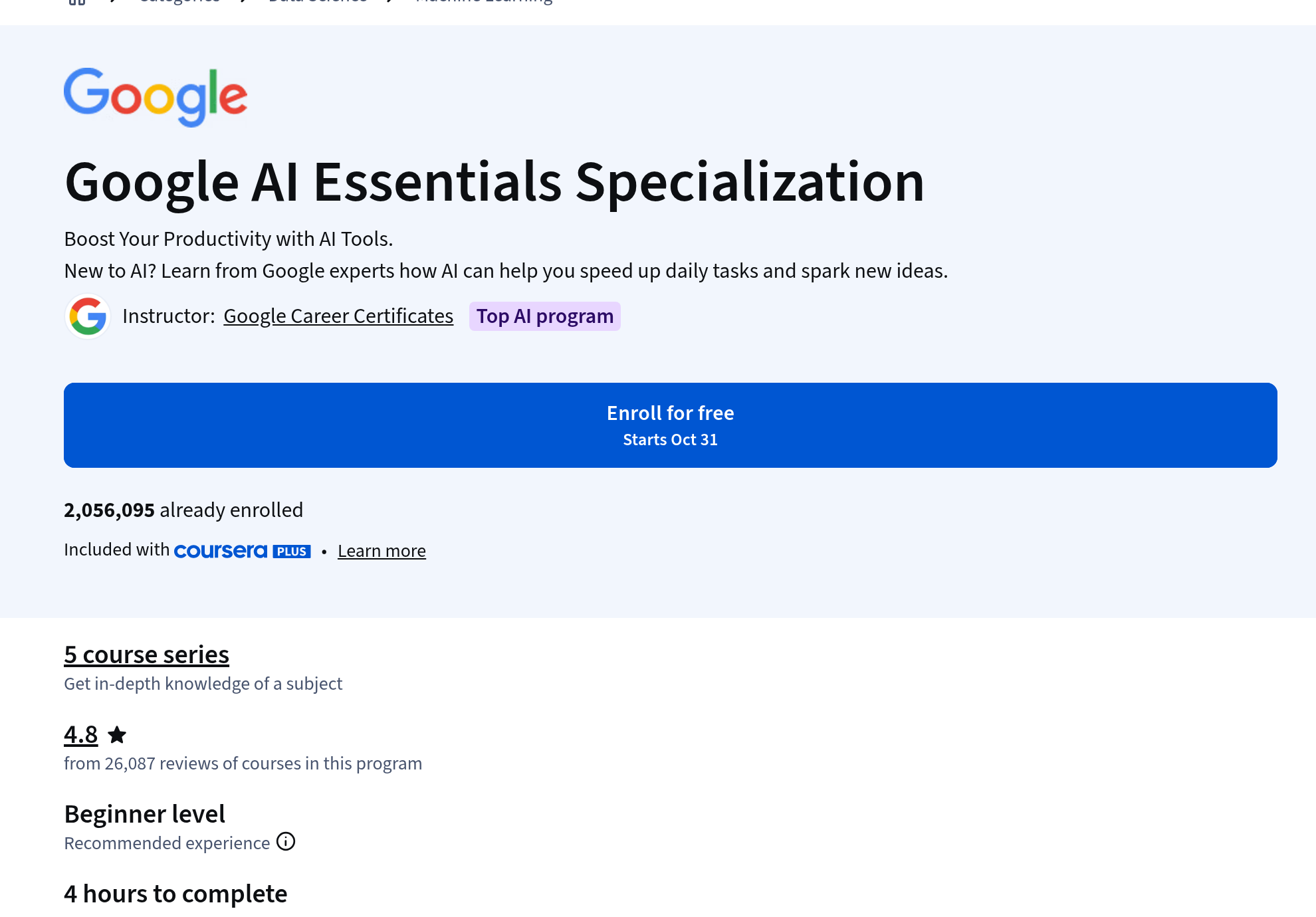
The weakness is depth. It teaches you to use AI tools well, not how AI works, and it’s quite tool-focused. One small annoyance: the course page lists different time estimates in different places, so plan for 8 to 10 hours rather than 4.
2. Anthropic AI Fluency: Framework and Foundations
- Who it’s for
- Anyone who works with AI assistants
- Time
- Self-paced, no total listed
- Cost
- Free
- Certificate
- Completion certificate after a final assessment
Go to AI Fluency Opens anthropic.skilljar.com
Anthropic’s AI Fluency course teaches a way of working with AI rather than a set of tricks. It’s built around a “4D” framework of Delegation, Description, Discernment and Diligence: deciding what to hand to AI, describing it clearly, judging the output and using it responsibly. Anthropic developed it with Prof. Joseph Feller of University College Cork and Prof. Rick Dakan of Ringling College.
It pairs well with Google AI Essentials. Google’s course shows you what tools can do. This one helps you decide when to trust them, which matters more as AI output ends up in client work and reports.
The drawback is that it’s framework-heavy, with less hands-on tool practice, and the certificate is a completion certificate from Anthropic rather than an industry credential.
Best AI Courses for Understanding AI Without Coding
3. AI for Everyone (DeepLearning.AI)
- Who it’s for
- Non-technical professionals
- Time
- 7 hours, 4 modules
- Cost
- Free first-module preview, then Coursera access
- Certificate
- Shareable certificate with paid access
Go to AI for Everyone Opens coursera.org
AI for Everyone is Andrew Ng’s non-technical introduction to what AI can and can’t do, and it’s one of the most taken AI courses online. The course page shows more than 2.6 million learners enrolled and a 4.8 rating from over 53,000 reviews. It takes about 7 hours and is available in 27 languages.
It’s especially good for managers who need to talk to technical teams, because it explains how companies pick and run AI projects.
The limitation is that it’s entirely conceptual. You won’t touch a tool or write a prompt, so pair it with a practical course if you want to apply what you learn.
4. Elements of AI (University of Helsinki)
- Who it’s for
- Curious beginners on any budget
- Time
- About 25 hours, 6 chapters
- Cost
- Free
- Certificate
- Not advertised for the main course
Go to Elements of AI Opens elementsofai.com
Elements of AI is the best free AI course for complete beginners. The University of Helsinki and MinnaLearn built it for non-experts, and over 2 million people have signed up, with graduates from more than 170 countries. Its six chapters run from “What is AI?” through machine learning and neural networks to the wider implications, and NTNU estimates about 25 hours to finish.
The exercises make you think, not just watch, and there’s a follow-up course, Building AI, for anyone who wants to go a step further.
We created an Elements of AI account to try it. The first exercise appears in Chapter 1, and you get one chance to submit your answers.
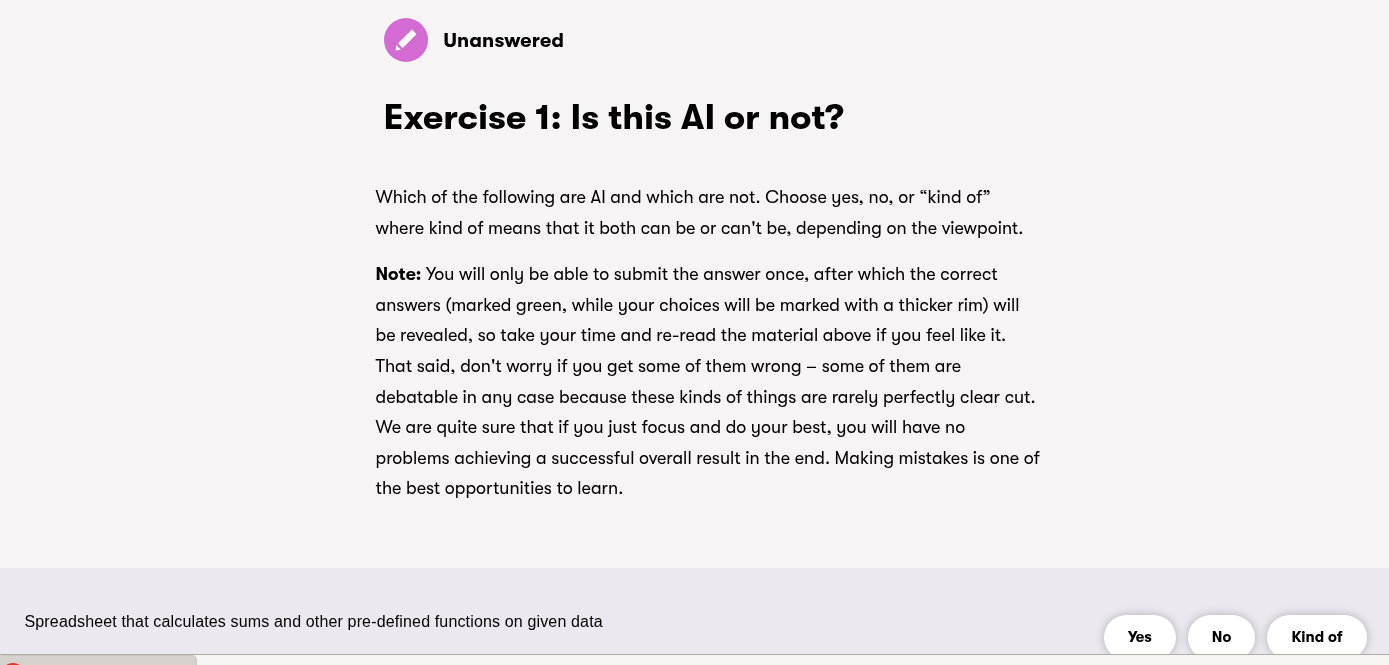
It’s mostly text, so visual learners may find it slow going. And if a certificate matters to you, check the site first, because the main course page doesn’t promise one.
Best AI Course for Managers and Business Leaders
5. AI for Business Specialization (Wharton)
- Who it’s for
- Managers deciding where AI fits
- Time
- About 44 hours across 4 courses
- Cost
- Coursera Plus
- Certificate
- Yes, from the University of Pennsylvania
Go to AI for Business Opens coursera.org
Wharton’s AI for Business Specialization is aimed at people who make decisions about AI rather than people who build it. Its four courses cover AI fundamentals for non-data scientists, uses in marketing and finance, AI in people management, and strategy and governance. The listed course times add up to about 44 hours, and it holds a 4.7 rating.
The Penn name on the certificate gives it more weight than most beginner certificates, which matters if you’re presenting AI plans to leadership.
Its weakness is that it stays at the strategy level. You’ll learn where AI creates value and what can go wrong, but not how to use a specific tool. The pace estimate also varies: the page suggests four weeks at 10 hours a week, while its FAQ expects most learners to take longer.
Best AI Certifications for Your Resume
6. Google Cloud Generative AI Leader
- Who it’s for
- Business roles wanting a credential
- Time
- Learning path plus a 90-minute exam
- Cost
- $99 exam fee, plus tax
- Certificate
- Google Cloud certification, valid 3 years
See the certification Opens cloud.google.com
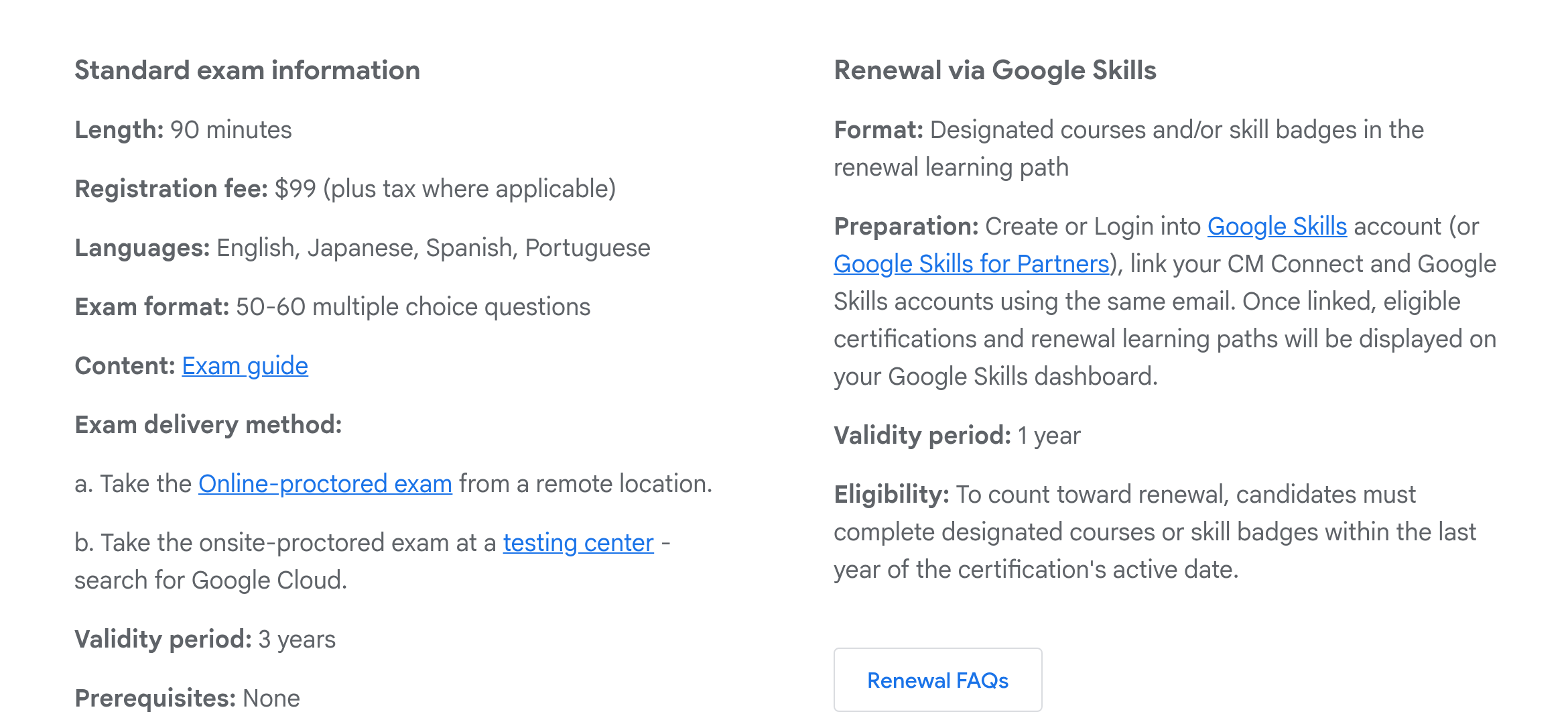
The Generative AI Leader exam is Google Cloud’s certification for people who don’t write code. It has no prerequisites and is open to “anyone in any job role,” with 50 to 60 multiple-choice questions in 90 minutes. It’s offered in English, Japanese, Spanish and Portuguese, and it stays valid for three years.
Unlike a course certificate, this is a proctored exam from a major cloud provider, which makes it a stronger signal on a resume. Google links a dedicated learning path to prepare for it.
The catch is that it leans on Google’s own products and ecosystem, so it’s most useful if your company works with Google Cloud.
7. AWS Certified AI Practitioner
- Who it’s for
- People who work around AI on AWS
- Time
- Study time plus a 90-minute exam
- Cost
- $100 exam fee
- Certificate
- AWS certification, valid 3 years
See the certification Opens aws.amazon.com
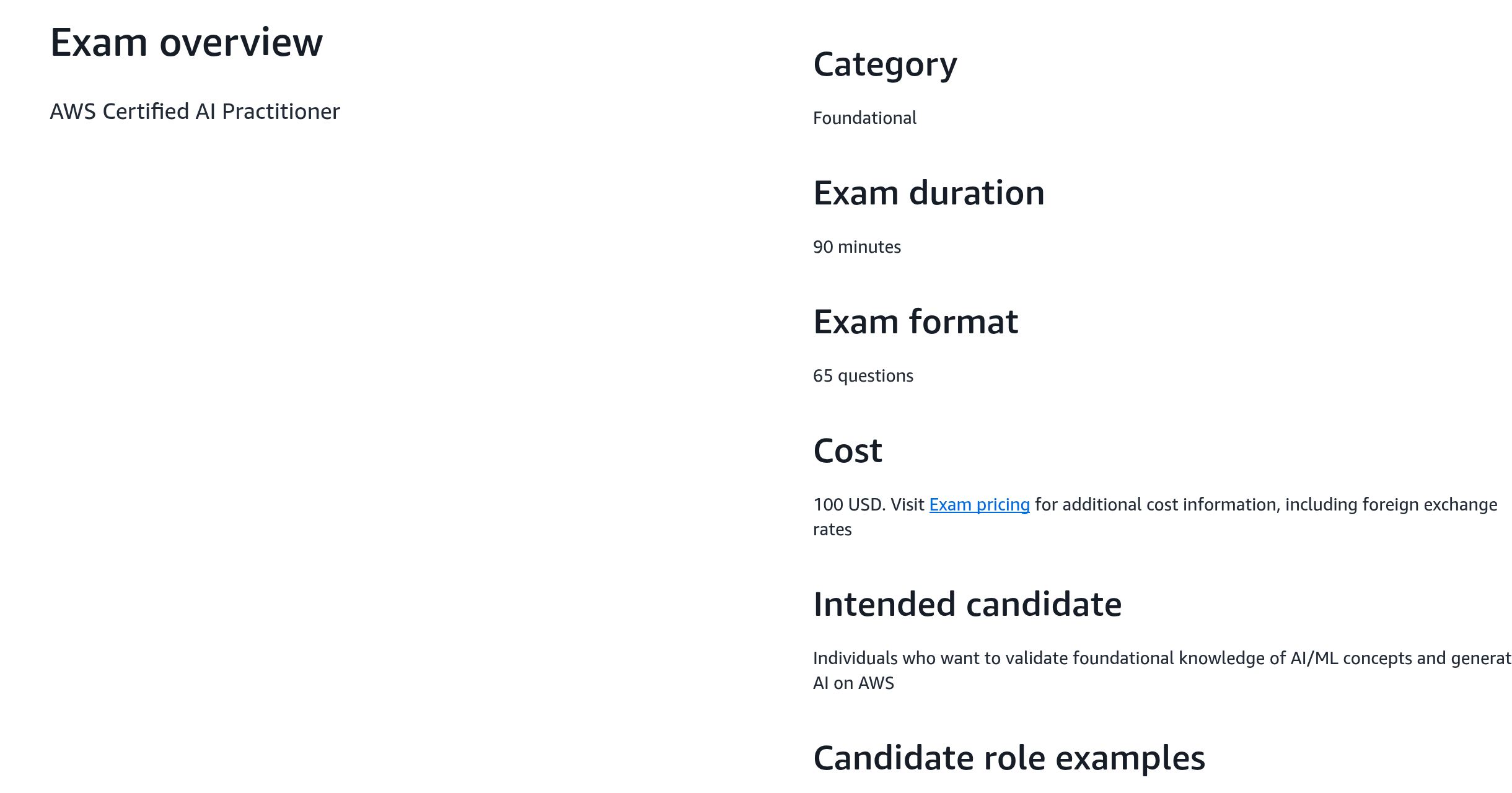
The AWS Certified AI Practitioner is the Amazon equivalent, a foundational exam for people who are familiar with AI and machine learning on AWS but don’t necessarily build those systems. It costs $100, runs 90 minutes with 65 questions, and is valid for three years. You can take it at a Pearson VUE center or online with a proctor.
Because so many companies run on AWS, it’s a useful credential for cloud, sales engineering and product roles.
The downside mirrors Google’s: it’s AWS-specific. If you’re new to cloud computing altogether, AWS itself suggests taking its Cloud Practitioner Essentials or Technical Essentials training first.
Best AI Courses for Learning to Build AI
8. CS50’s Introduction to AI with Python (Harvard)
- Who it’s for
- Programmers who want the foundations
- Time
- 7 weeks of lectures and projects
- Cost
- Free, paid certificate options on edX
- Certificate
- Optional verified certificate
Go to CS50 AI Opens cs50.harvard.edu
Harvard’s CS50 AI is the best free course for programmers who want to understand AI from the algorithms up. Its seven weeks cover search, knowledge, uncertainty, optimization, learning, neural networks and language, and each week ends with a project you can submit for feedback.
The projects are what make it stick. You don’t just watch a lecture on search algorithms, you write one that plays a game.
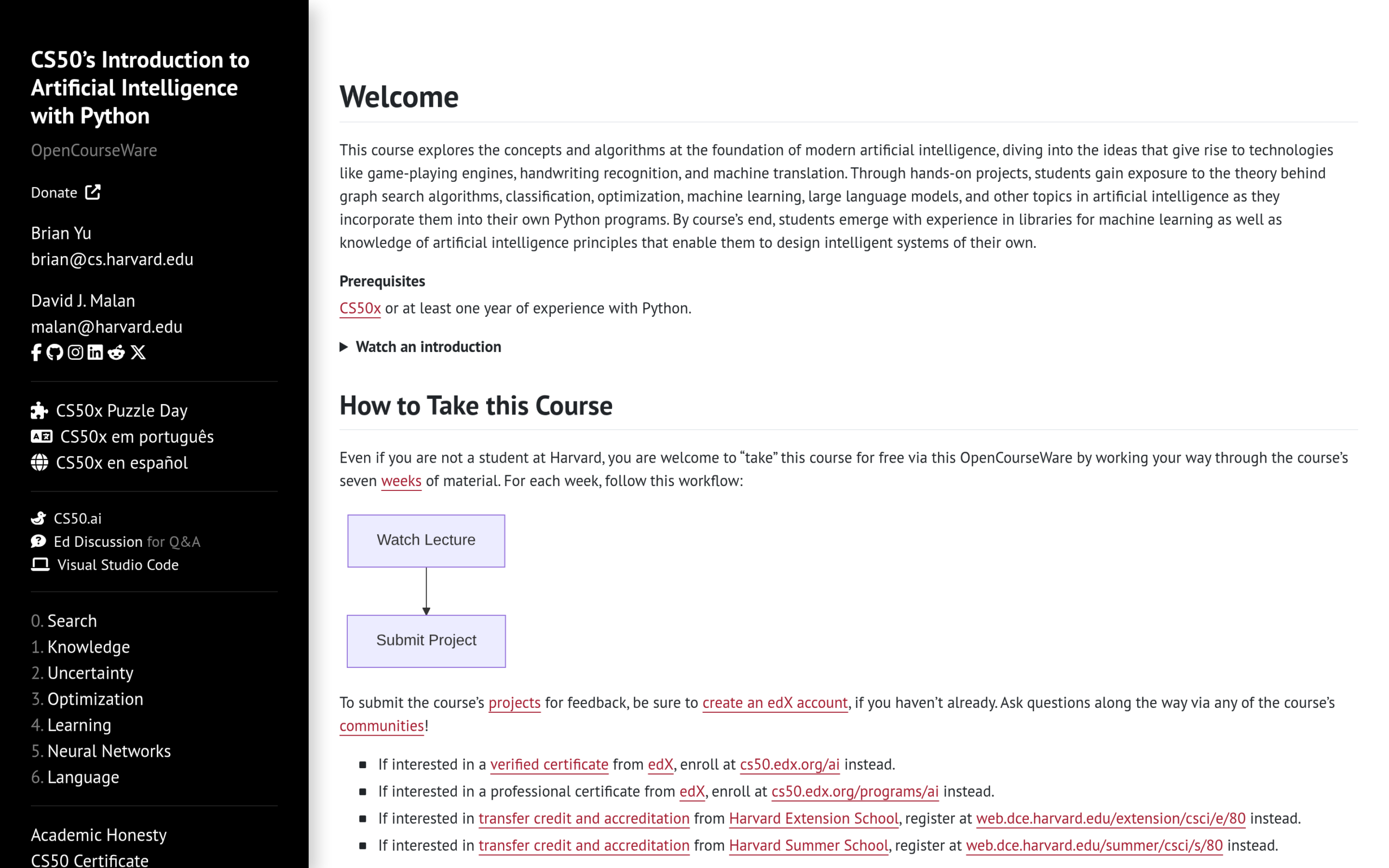
It isn’t for beginners to coding. Harvard asks for CS50x or at least a year of Python first, and the projects take real time.
9. Machine Learning Specialization (Stanford and DeepLearning.AI)
- Who it’s for
- Aspiring machine learning engineers
- Time
- About 95 hours, 3 courses
- Cost
- Coursera Plus
- Certificate
- Yes
Go to the specialization Opens coursera.org
The Machine Learning Specialization is the classic first step into building machine learning models, created by Stanford Online and DeepLearning.AI and taught by Andrew Ng. It has a 4.9 rating from more than 39,000 reviews and over 850,000 enrolled learners. The page suggests two months at 10 hours a week, and the three course listings add up to about 95 hours.
Ng is famous for explaining math intuitively, and the labs use Python, so you finish with working code, not just notes.
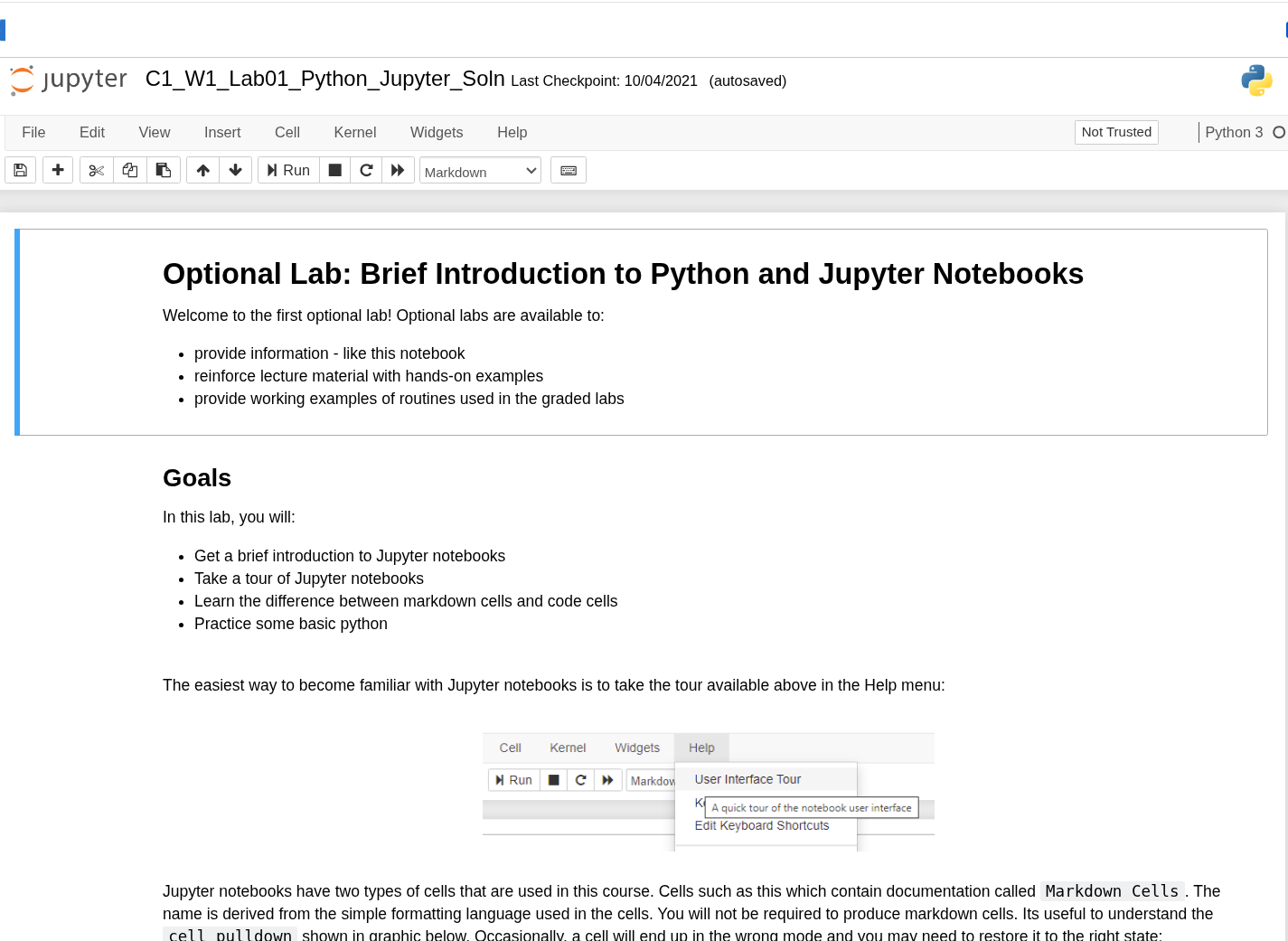
You’ll need basic coding (loops, functions, if/else statements) and high school algebra. The course focuses on classic machine learning, so it won’t teach you to build with large language models directly.
10. Deep Learning Specialization (DeepLearning.AI)
- Who it’s for
- Learners ready for neural networks
- Time
- About 129 hours, 5 courses
- Cost
- Coursera Plus
- Certificate
- Yes
Go to the specialization Opens coursera.org
The Deep Learning Specialization is the natural second step after the Machine Learning Specialization. Its five courses carry a 4.8 rating from more than 147,000 reviews, with over a million learners enrolled, and they cover neural networks, tuning, project strategy, convolutional networks and sequence models.
It gives you the vocabulary and intuition that most AI engineering roles assume you already have.
It’s long, at about 129 hours across the course listings, and rated intermediate. Expect to need comfortable Python and basic linear algebra before you start.
11. fast.ai Practical Deep Learning for Coders
- Who it’s for
- Coders who learn by building
- Time
- 9 lessons of about 90 minutes
- Cost
- Free
- Certificate
- None
Go to fast.ai Opens course.fast.ai
fast.ai’s Practical Deep Learning for Coders flips the usual order: you build first and learn the theory as you need it. Jeremy Howard, a former Kaggle president and chief scientist, promises that by the end of the second lesson you’ll have built and deployed your own deep learning model on data you collect. Part 1 has nine lessons of about 90 minutes each, and it’s free.
The prerequisites are refreshingly light. You need about a year of coding experience and high school math, not university calculus.
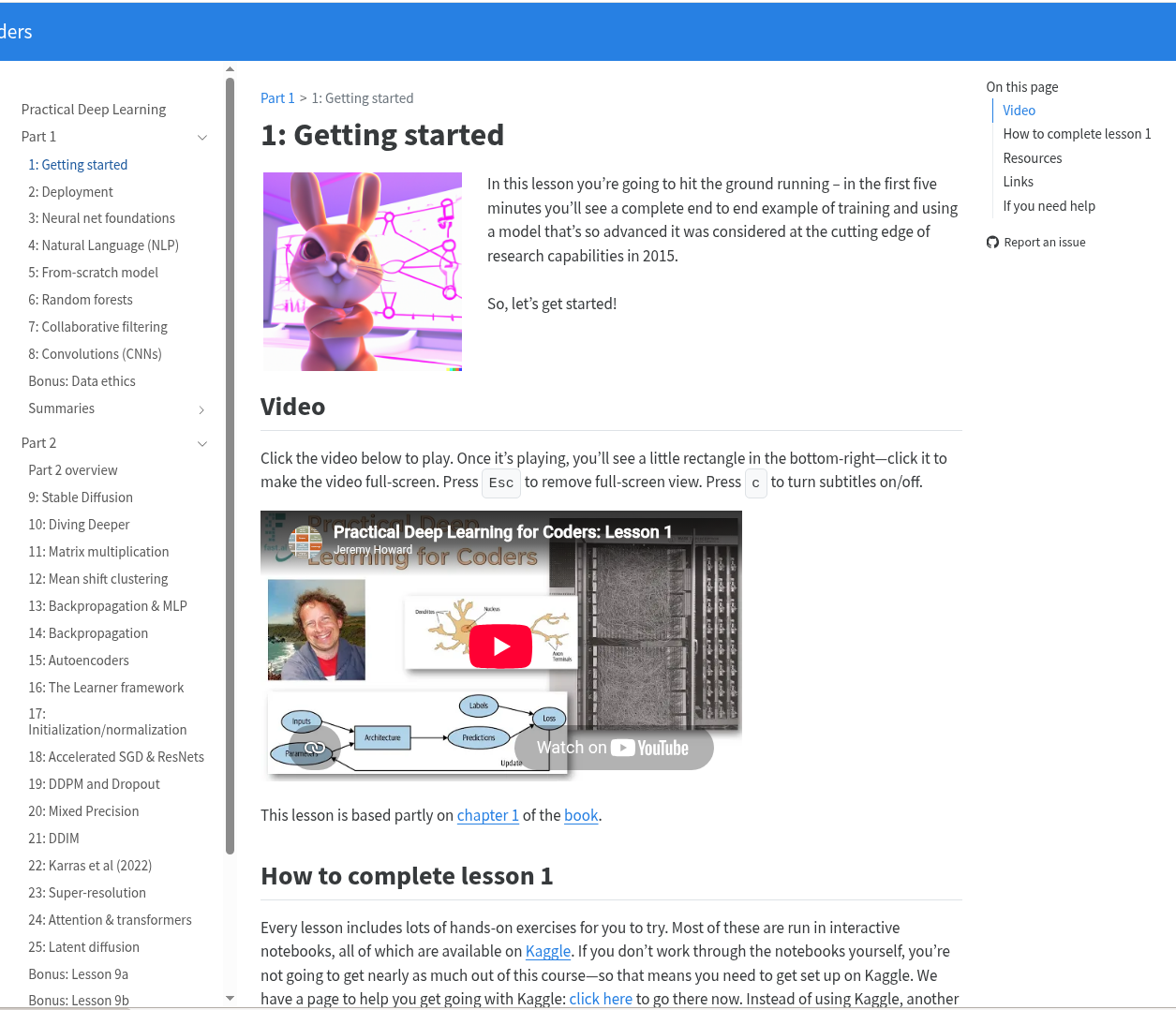
There’s no certificate, and the top-down style can feel scattered if you prefer to learn the math before the code. Learners who want a structured syllabus often take it alongside a more traditional course.
12. Hugging Face LLM Course
- Who it’s for
- Developers working with language models
- Time
- 12 chapters, self-paced
- Cost
- Free, with no ads
- Certificate
- Not yet available
Go to the LLM Course Opens huggingface.co
The Hugging Face LLM Course is the most practical free course on working with large language models directly. Across 12 chapters, it covers the Transformers, Datasets and Tokenizers libraries, classic language tasks, building demos and advanced LLM topics, all using the tools many AI teams actually ship with.
It’s written by the people who maintain those libraries, so the examples match how the tools work today.
It assumes good Python skills, and Hugging Face itself recommends taking an introductory deep learning course such as fast.ai first. There’s no certificate yet.
Are Free AI Courses Good Enough?
Yes, free AI courses are good enough to learn the material, and five of the twelve courses here cost nothing: Elements of AI, Anthropic AI Fluency, CS50 AI, fast.ai and the Hugging Face LLM Course. Several of them are among the most respected options in their category.
What free usually doesn’t include is a recognized certificate or graded feedback. That’s the real reason to pay. If you only want the knowledge, start free. If you need proof for an employer, budget for a Coursera month or an exam fee. You can also try a paid Coursera course before you spend anything, because Coursera now opens the first module of almost every course at no cost.
Do AI Certificates Help You Get Hired?
AI certificates help most as a first filter, not as proof that you can do the job. A Google, AWS or university name on your resume can get you past a recruiter’s first screen, especially if you’re moving into a new field. But for technical roles, hiring managers mostly look at what you’ve built.
So treat the certificate and the portfolio as a pair. If you take the Machine Learning Specialization, publish your lab projects on GitHub. If you take Google AI Essentials, write up one real workflow you improved at work. The certificate opens the door, and the project shows what’s behind it.
How Much Math and Coding Do You Need?
You need no math or coding for the first five courses on this list, and steadily more for the rest. Here’s what each course expects before you start, based on the providers’ own prerequisites:
| Course | Coding needed | Math needed |
|---|---|---|
| Google AI Essentials, AI Fluency, AI for Everyone, Elements of AI, Wharton | None | None |
| Google Generative AI Leader, AWS AI Practitioner | None | None |
| Machine Learning Specialization | Basic (loops, functions) | High school algebra |
| fast.ai | About a year of coding | High school math |
| CS50 AI | CS50x or a year of Python | Not specified |
| Deep Learning Specialization | Comfortable Python | Basic linear algebra |
| Hugging Face LLM Course | Good Python | Deep learning basics recommended |
If you’re starting from zero and want to build AI eventually, learn basic Python first. Without it, the technical courses become frustrating fast. If you’d like to go deeper on theory later, MIT’s Introduction to Deep Learning (6.S191) publishes its lectures and labs free, though it assumes calculus and linear algebra.
Best AI Courses FAQs
What is the best AI course for beginners?
Google AI Essentials is the best paid beginner course for using AI at work. Elements of AI is the best free one for understanding how AI works.
What is the best free AI course?
Elements of AI for non-technical learners, and fast.ai or CS50 AI for people who can already code.
How long does it take to learn AI?
About 8 hours to use AI tools well, roughly 30 hours to understand the basics, and about 200 hours of courses to start building machine learning models.
Can I learn AI without coding?
Yes. Google AI Essentials, AI for Everyone, Elements of AI, Wharton’s AI for Business and both exams need no coding at all.
Which AI certification is most recognized?
For non-technical roles, the Google Cloud Generative AI Leader and AWS Certified AI Practitioner exams carry the most weight, because they’re proctored by major cloud providers.
Where Should You Start?
If you just want to get better at using AI at work, take Google AI Essentials this week and try to finish it inside Coursera’s 7-day free trial. Add Anthropic’s free AI Fluency course for judgment about when to trust the output.
If you want to build AI, don’t start with a certificate. Learn basic Python, then take Andrew Ng’s Machine Learning Specialization on monthly Coursera Plus, and publish every lab project as you go. That’s the path that turns a course into something an employer can see.
You reached the last module. 3 in 100 do.
Keep going in Courses by Subject:
TopicCourses by Subject