
A low-cost, well-structured course for adult beginners in Spanish, French, German or Italian, with clear grammar notes and AI speaking practice. Thin past intermediate level, and live classes are gone.
- Speaking practice 25%6.5
- Teaching method 20%8.0
- Depth by level 20%6.5
- Habit and motivation 15%6.0
- Value for money 15%8.5
- App and offline 5%8.0
- Grammar explained inside every lesson
- Practical dialogues for travel and work
- 10 to 15 minute lessons
- About $9 a month or less on annual billing
- University study backs its speaking gains
- Only 13 languages, and smaller courses are thin
- Little content past intermediate
- Babbel Live classes closed in 2025
- Less motivating than gamified apps
On this page
- What Babbel Is and How It Teaches
- Babbel Features Worth Knowing About
- Which Languages Babbel Covers Best
- Babbel Pricing and Plans in 2026
- Which Babbel Plan Pays Off? Our Cost Breakdown
- Does Babbel Work? What the Research Shows
- Babbel Pros and Cons
- How Babbel Stacks Up Against Other Language Apps
- Who Should Use Babbel (and Who Shouldn’t)
- Tips to Get More From a Babbel Subscription
- Babbel Review FAQs
- Bottom Line on Babbel
The short Babbel review: it’s one of the best-value paid apps for adult beginners who want real grammar explanations and practical dialogue, not a streak game. A yearly plan costs about $9 a month or less, each lesson fits in a quarter of an hour, and a university study found most users improved their speaking in 12 weeks. It’s weaker for advanced learners, less common languages and anyone who needs a live tutor, since Babbel shut down its live classes in 2025.
- Babbel teaches 13 languages to English speakers, with its deepest courses in Spanish, French, German and Italian.
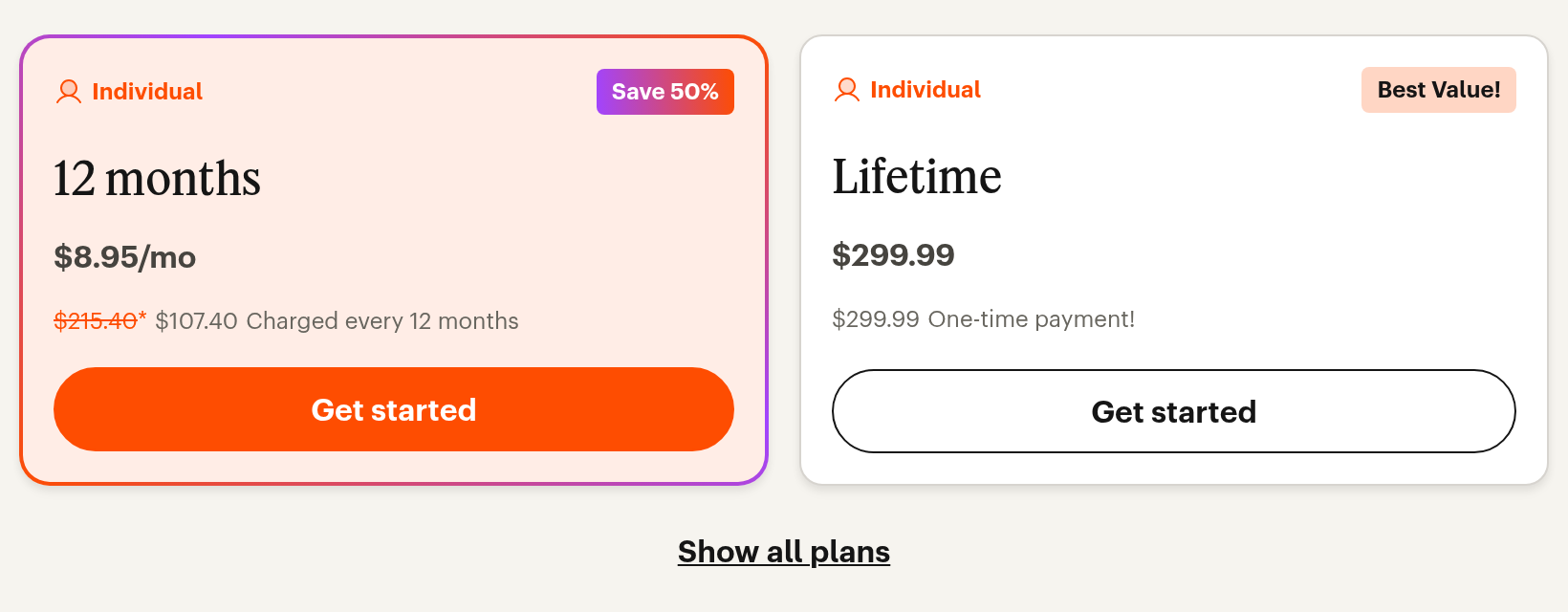
- Plans cost $8.95 a month with 12-month billing ($107.40 upfront) and $299.99 for a one-time lifetime plan. A 3-month plan is reported at $15.25 a month.
- Babbel Speak, an AI conversation partner, is in beta for Spanish, French, German and Italian.
- Babbel Live, the group class service, closed in July 2025.
- You can get a full refund within 20 days of subscribing.
What Babbel Is and How It Teaches
Babbel is a subscription language app built around short, structured lessons. Each lesson introduces a handful of words and phrases inside a realistic situation, like checking into a hotel or making small talk with a coworker, then explains the grammar behind them and has you practice through listening, typing, matching and speaking exercises.
The approach is closer to a well-organized textbook than to a game. Courses are grouped by level, from beginner to intermediate, and each one builds on the last. You’ll see brief explanations of why a verb changes form or where an adjective goes, written in plain English. That’s the main thing people pay for: the app tells you the rule, not just whether you got the answer right.
Lessons usually take 10 to 15 minutes, which makes it easy to fit one in on a commute or lunch break. After each lesson, the words you learned move into a review queue that brings them back at spaced intervals.
Babbel Features Worth Knowing About
Structured courses
The core of the app is its sequence of courses for each language. In the bigger languages, these run from absolute beginner into intermediate territory. FluentU’s review notes that Babbel’s German course reaches upper intermediate (B2), while some smaller courses, like Russian, stop at beginner level. Depth depends heavily on which language you pick.
Review with spaced repetition
Babbel’s review section brings back vocabulary you’ve studied just before you’re likely to forget it. You can review through flashcards, listening, writing or speaking, which helps if you want to drill spelling one day and pronunciation the next.
Speech recognition and Babbel Speak
Many exercises ask you to repeat a phrase out loud, and the app checks your pronunciation. The newer addition is Babbel Speak, an AI-powered conversation partner in the app’s Speak tab. You pick a scenario, see the goals you need to hit, then talk through it turn by turn. You can slow the AI down, see translations or ask for a hint, and you get feedback on your tasks and vocabulary when you finish.
Babbel labels Speak a beta feature. According to its help center, it’s available on mobile only, for French, German, Italian and Mexican Spanish with an American English display language. Babbel says more languages are planned and that it may charge for Speak in the future.
Podcasts, games and extras
Babbel also offers language podcasts, short vocabulary games and cultural videos for some languages. These are nice for variety, but they’re extras. Most of the value sits in the lessons themselves.
Which Languages Babbel Covers Best
Babbel offers 13 languages for English speakers, including Spanish, French, German, Italian, Portuguese, Dutch, Swedish, Turkish, Danish, Norwegian, Polish and Russian. That’s far fewer than Duolingo, but Babbel puts more work into each course.
The quality isn’t the same everywhere, though. Spanish, French, German and Italian get the most lessons, the newest features and access to Babbel Speak. Smaller languages have fewer courses and can feel thin once you get past the basics. If you’re learning one of the big four, Babbel is a strong choice. If you’re learning Danish or Russian, check how many courses exist before you commit to a long plan.
Babbel Pricing and Plans in 2026
Babbel doesn’t offer a free tier, but registration is free and the first lesson of every course costs nothing. Here are the US prices. The 12-month and Lifetime prices come from Babbel’s own prices page, checked through a US connection on November 1, 2026. The other rows are reported prices that Babbel only shows at checkout, so confirm them there:
| Plan | Price per month | Billed as |
|---|---|---|
| 3 months (reported) | $15.25 | $45.75 upfront |
| 12 months | $8.95 | $107.40 upfront |
| Lifetime | None | $299.99 once |
| Students, 3 months (reported) | About $5.33 | $15.99 upfront |
| Military, veterans, educators and healthcare workers, 6 months (reported) | $6 | $36 upfront |
Babbel’s prices page now says every plan unlocks all 14 languages. Babbel offers a full refund if you ask within 20 days of subscribing, which works as a stand-in for a free trial.
Which Babbel Plan Pays Off? Our Cost Breakdown
Which billing option you pick changes the total far more than the monthly figure implies. We worked out what each option costs over time, assuming prices stay the same at renewal and you study one language.
| How long you use Babbel | 3-month plan, renewed | Annual plan | Lifetime plan |
|---|---|---|---|
| 1 year | $183 | $107.40 | $299.99 |
| 2 years | $366 | $214.80 | $299.99 |
| 3 years | $549 | $322.20 | $299.99 |
| 5 years | $915 | $537 | $299.99 |
A few takeaways from the math:
- Renewing the 3-month plan is the worst deal. Four back-to-back quarters run about 70% more than one annual plan. Use it only as a short test.
- Lifetime pays off in under three years at the full yearly price.
- Daily study makes it cheap per hour. Study 15 minutes daily for twelve months and you’d log about 91 hours, which works out to roughly $1.20 an hour on annual billing. A private tutor usually costs many times that.
Our advice: start with a 12-month plan bought during a sale, and use the 20-day refund window if it doesn’t click. Only buy lifetime once you know you’ll stick with Babbel for years.
Does Babbel Work? What the Research Shows
Babbel has better outside evidence than most apps. In a 2019 study led by researchers at Michigan State University, college students used Babbel to learn Spanish for 12 weeks. Of the 85 who started, 54 finished, and 59% of those finishers moved up at least one sublevel on the ACTFL oral proficiency scale. Students who put in more hours improved more, and nearly all finishers gained in vocabulary, grammar or speaking ability.
Two caveats are worth keeping in mind. About a third of participants dropped out, which tells you that sticking with any app is the hard part. And a sublevel gain is a step, not fluency. Babbel can get you to confident beginner or lower intermediate, but real conversations with real people are still what take you further.
Babbel Pros and Cons
What Babbel does well
- Clear grammar explanations inside each lesson
- Practical, adult-focused dialogues you can use while traveling or at work
- Short lessons that fit a busy day
- Low cost on a yearly or lifetime plan
- Published research behind its results
Where it falls short
- Only 13 languages, and smaller courses are thin
- Not much material past intermediate level
- No live classes since Babbel Live closed in 2025
- Less motivating than gamified apps if you need streaks and leagues
- Babbel Speak is still a beta for four languages
How Babbel Stacks Up Against Other Language Apps
Babbel sits in the middle of the market: more structured than a free game, cheaper than a human teacher. Here’s how it compares in approach with the apps people most often weigh it against.
| App | Teaching style | Where it beats Babbel | Where Babbel wins |
|---|---|---|---|
| Duolingo | Gamified bite-size drills | Free tier, far more languages, stronger daily habit hooks | Grammar explanations and adult, real-world dialogue |
| Pimsleur | Audio-first spoken lessons | Listening and speaking from day one, hands-free study | Reading, writing and lower yearly cost |
| Busuu | Lessons plus feedback from native speakers | Human corrections on your writing and speaking | Polished dialogues and grammar notes |
| italki or Preply | Paid one-on-one tutoring | Live conversation and personal correction | Price, and structure for total beginners |
Many learners get the best results by combining Babbel with one of these. A common setup is Babbel for grammar and vocabulary, plus a weekly tutor session once you can hold a simple conversation.
Who Should Use Babbel (and Who Shouldn’t)
You’re an adult starting from zero in one of Babbel’s big four languages
Babbel is a great fit. You get the deepest courses and Babbel Speak.
You want to understand grammar, not just guess at it
Babbel explains rules better than most apps at this price.
You’re preparing for a trip or a move in the next few months
The practical scenarios match real situations well.
You’re already intermediate or advanced
Look at tutoring platforms like italki or Preply instead.
You only stay motivated with streaks and competition
Duolingo will probably keep you coming back more often.
Tips to Get More From a Babbel Subscription
- Do the review sessions. New lessons feel more productive, but the spaced review is what makes words stick.
- Say everything out loud. Even when an exercise only asks you to tap, speaking the phrase builds the habit you’ll need later.
- Use Babbel Speak after each unit if your language has it, to practice the new phrases in a conversation.
- Add real input. Pair the app with podcasts, TV shows or a weekly tutor session once you finish the beginner courses.
- Buy during a sale. Babbel discounts yearly and lifetime plans several times a year, so avoid paying full price if you can wait.
Babbel Review FAQs
Is Babbel worth the money?
Yes, for adult beginners in one of its main languages. A yearly plan costs about $9 a month or less, which is cheap for structured lessons with grammar explanations and speaking practice.
Is there a free version of Babbel?
No. You can sign up for free and try the first lesson of every course, and paid plans come with a 20-day refund window.
Will Babbel get you to fluency?
By itself, no. It can take you from zero to a solid beginner or lower intermediate level, but fluency needs lots of real conversation and listening practice.
Is Babbel good for learning Spanish?
Spanish is one of Babbel’s strongest courses. It has the most lessons, separate options for Spain and Latin America in Babbel Speak, and it’s the language used in the Michigan State study. Beginners heading to Mexico or Spain get a lot from it.
Does Babbel still have live classes?
No. Babbel Live closed to individual consumers in July 2025. The AI-based Babbel Speak is now its main speaking feature.
When will I notice progress with Babbel?
Most learners notice progress within a few weeks of daily lessons. In the Michigan State study, 59% of students who finished improved their speaking level within 12 weeks.
Bottom Line on Babbel
Babbel is a smart buy for adults who want an organized, grammar-aware way to start speaking one of its four flagship languages. It’s affordable on a yearly plan, the lessons are short and useful, and its results are backed by research. It won’t take you to advanced levels or replace a human teacher, so plan to add a tutor once you outgrow it.
You reached the last module. 3 in 100 do.
Up next for Babbel:
ComparisonBabbel vs Duolingo