
On this page
- Duolingo Alternatives Compared
- Pick an Alternative Based on Why You’re Leaving Duolingo
- Our 10 Duolingo Alternatives in Detail
- How to Switch Without Losing Your Progress
- The Best Free Duolingo Alternatives
- Should You Quit Duolingo or Combine It?
- Duolingo Alternatives FAQs
- Bottom Line: Choose the Fix for Your Biggest Gap
Looking for Duolingo alternatives in 2026? Babbel is the strongest pick when you need grammar explained, Pimsleur is best for finally speaking out loud, and italki is the move once you’re ready to talk with a real tutor. The right one depends less on which app is “best” and more on why Duolingo stopped working for you.
Most people leave Duolingo for one of a few reasons: they can read but can’t speak, the energy or heart limits and ads got annoying, the grammar never really clicked, or they hit a wall at the intermediate level. Each of those problems has a different fix. Below, you’ll find ten alternatives matched to those reasons, with US prices checked in October and November 2026 and the free options worth knowing about.
Three picks that cover most reasons people switch:
Best structured course
Babbel
Short dialogue-based lessons with grammar explained in English. Feels like a real course, not a game.
About $83 to $108 a year
Best for speaking out loud
Pimsleur
30-minute audio lessons where you answer out loud. Built for commutes and walks.
All Access from $131.99 a year
Best for real conversation
italki
Private video calls with tutors who choose their own rates and hours.
About $4 to $60 an hour
Duolingo Alternatives Compared
| App | US price | Free option | Main strength |
|---|---|---|---|
| Babbel | About $83 to $108 a year | First lesson of each course | Grammar explained, practical dialogues |
| Pimsleur | All Access from $131.99 a year | 7-day trial | Speaking from day one |
| italki | About $4 to $60 per hour | None | Live tutors |
| Busuu | About $70 to $139 a year | Limited free account | Corrections from native speakers |
| Rosetta Stone | $159 a year or $19.99 a month | Sample lesson | Full immersion, pronunciation |
| Speak | Premium $83.99 a year | 7-day trial | AI speaking practice |
| Memrise | Pro from $61.99 a year | Limited lessons with ads | Real native-speaker video clips |
| Lingopie | $59.99 to $83.99 a year | A few minutes a week | Learning from TV shows |
| Language Transfer | Free | Everything | Understanding how the language works |
| HelloTalk | Free, with optional paid upgrade | Core app | Chatting with native speakers |
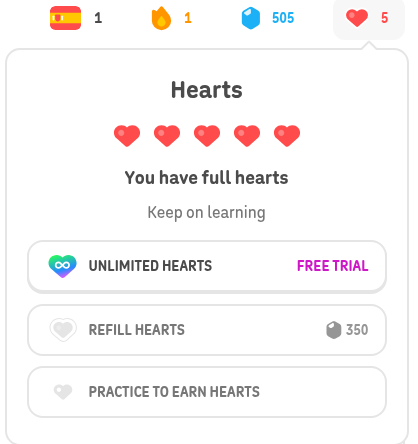
We checked a free Duolingo account on the web in November 2026, and it still uses hearts there rather than energy: five hearts, with refills for gems or unlimited hearts through a Super trial. Duolingo’s mobile apps have been reported to use an energy meter instead, so what you see depends on where you learn.
Pick an Alternative Based on Why You’re Leaving Duolingo
Here’s the quickest way to choose. Find the row that sounds like you:
| Your problem with Duolingo | Switch to | Why it fixes the problem |
|---|---|---|
| You can read, but freeze when you try to speak | Pimsleur or Speak | Both make you talk out loud in every lesson |
| Grammar rules never made sense | Babbel or Language Transfer | Both explain why sentences work, in English |
| Energy or heart limits and ads drive you up the wall | Memrise, Busuu or Babbel | Paid plans without a lesson cap, at similar yearly prices |
| You’ve finished the course and feel stuck at intermediate | italki or Lingopie | Real conversation and real native content take you further |
| You want feedback from a real person | Busuu or italki | Native speakers correct your writing and speaking |
| You want to sound like a native | Rosetta Stone or Pimsleur | Strong pronunciation coaching and audio-first lessons |
| You don’t want to pay anything | Language Transfer and HelloTalk | Free, and they cover what Duolingo misses |
Our 10 Duolingo Alternatives in Detail
1. Babbel: Best Structured Alternative
Price: about $83 to $108 a year on a 12-month plan. Languages: 13, mostly European.
Babbel is what many people wish Duolingo was. Each lesson runs a little over ten minutes and centers on a realistic conversation, like ordering food or checking into a hotel, with short grammar notes in English when a new pattern comes up. There’s less of a game feel and more of a course feel. Babbel’s language list is much shorter than Duolingo’s, so check that yours is included. One plan covers all of its languages.
2. Pimsleur: Best for Learning to Speak
Price: All Access from $131.99 a year, or about $19.99 a month for one language such as Spanish. Languages: 50+.
Pimsleur is audio-first. Each 30-minute lesson asks you to listen, then answer out loud before the speaker gives the correct version. It feels slow at first, but it trains exactly what Duolingo neglects: pulling words out of your memory and saying them under mild pressure. It’s ideal if you commute, walk or exercise. The All Access plan covers every language and can be shared by up to four people, and it comes with a 7-day free trial.
3. italki: Best for Real Conversation
Price: tutors set their own rates, from about $4 to $60 an hour. Languages: very wide, depending on available tutors.
No app can fully replace talking to a person, and italki is the most flexible way to do it. You browse tutors, watch their intro videos, check reviews and book single lessons, often 30 or 60 minutes. A common setup is an app for the basics plus a weekly session with a tutor to practice speaking. Community tutors are cheaper and focus on conversation, while professional teachers cost more and follow a structured plan.
4. Busuu: Best for Feedback From Native Speakers
Price: about $70 to $139 a year, or $6.99 to $23.49 a month depending on the plan.
Busuu combines structured lessons with a community feature that Duolingo doesn’t have: you write or record answers, and native speakers of that language correct them. In return, you correct learners of your own language. It’s a simple way to get human feedback without booking a tutor. Lessons are organized by level, so it’s easy to see how far you’ve progressed.
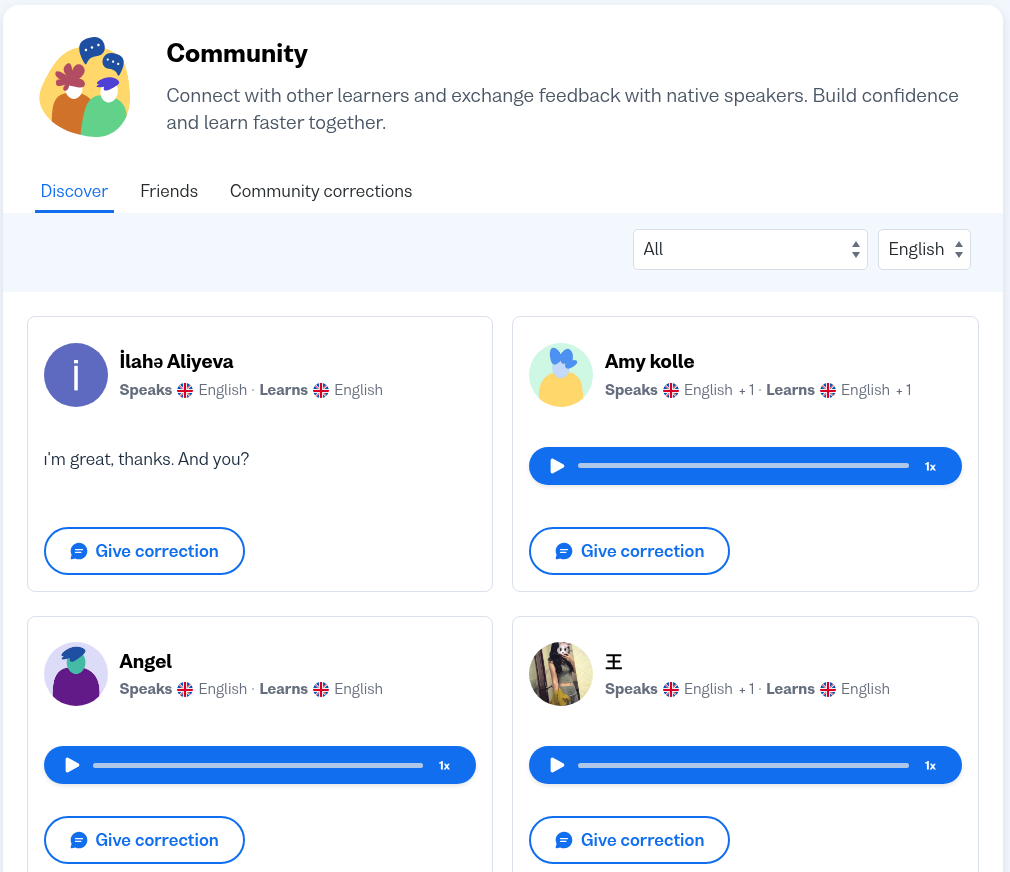
We created a free Busuu account to look at this feature. The Community tab lists other learners’ answers with a Give correction button, and a separate Community corrections tab lets you submit picture or video exercises for native speakers to correct.
5. Rosetta Stone: Best Full-Immersion Course
Price: $159 for a year, or $19.99 month to month. Languages: 25 courses.
Rosetta Stone teaches with pictures and audio and no English at all, which pushes you to think in the new language. Its TruAccent speech recognition gives detailed pronunciation feedback, and its rebuilt Sapphire app added written conversation practice in 2026. Spanish and English learners can also pick a regional version, such as Latin American or Spain Spanish. The trade-off is that grammar is rarely explained directly.
6. Speak: Best AI Speaking Practice
Price: Premium $83.99 a year or $17.99 a month; Premium Plus $164.99 a year, as reported in August 2026. Confirm the current price in the App Store before you subscribe.
Speak is built around talking. Lessons have you speak most of the time, and an AI tutor holds role-play conversations with you and coaches your pronunciation. If your main frustration with Duolingo is that you never actually speak, Speak attacks that head-on. It supports fewer languages than Duolingo, so check yours before subscribing. A 7-day free trial lets you test it.
7. Memrise: Best for Hearing How Locals Really Talk
Price: Pro from $61.99 a year. Free: limited lessons with ads.
Memrise’s standout feature is its library of short video clips of native speakers saying everyday phrases, so you hear how people really talk rather than a text-to-speech voice. It also includes AI conversation practice. It’s a good swap if you liked Duolingo’s quick sessions but want more natural vocabulary and listening.
8. Lingopie: Best for Binge-Watching Your Way to Fluency
Price: $59.99 to $83.99 a year, or $11.99 to $13.99 a month.
Lingopie streams TV shows and movies with interactive subtitles. Click any word to see its translation and save it for review. It’s best once you know the basics and want hours of real listening practice without it feeling like homework. It’s a strong next step for learners who’ve finished their Duolingo course and don’t know what to do next.
9. Language Transfer: Best Free Grammar Course
Price: free, funded by donations.
Language Transfer is an audio course where a teacher walks one student through the language step by step, and you pause to answer before the student does. It’s especially good at showing how a language fits together, which is exactly what Duolingo’s drills leave out. The catch is that it covers only a handful of languages, including Spanish, French, Italian and German.
10. HelloTalk: Best Free Way to Chat With Native Speakers
Price: free, with an optional paid upgrade.
HelloTalk is a language exchange app. You chat by text or voice with native speakers who want to learn your language, helping each other along the way. It’s not a course, so it works best alongside one. For free, regular conversation practice, though, it’s hard to beat.
How to Switch Without Losing Your Progress
Leaving Duolingo after a long streak can feel like throwing away months of work. It isn’t. The vocabulary and patterns you learned stay with you, and a better-matched tool will build on them faster. A few tips make the switch smoother:
- Use placement tests. Babbel, Busuu and Rosetta Stone let you skip ahead, so you don’t repeat beginner material you already know.
- Overlap for two weeks. Keep a short Duolingo session going while you start the new app. That keeps the habit alive while the new routine forms.
- Measure progress differently. Instead of a streak, track something that matters: minutes spoken, episodes understood without subtitles or conversations you got through.
- Take advantage of trials. Pimsleur and Speak offer 7 free days. Try one properly, every day for a week, before deciding.
- Book a single tutor session early. One 30-minute italki lesson will show you exactly where your gaps are, which tells you which app to pick.
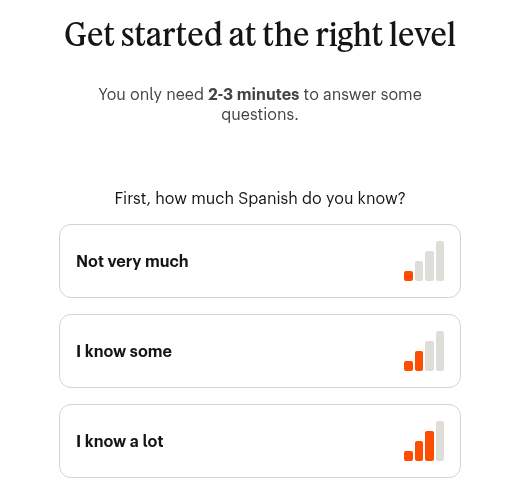
We tried Babbel’s placement check on a free account. It asks how much of the language you already know, then runs a short multiple-choice quiz before suggesting a starting level.
The Best Free Duolingo Alternatives
If you want to stop paying for an app entirely, or never paid for Duolingo in the first place, these combinations cover more than Duolingo alone:
- Language Transfer plus HelloTalk: real grammar understanding plus real conversation, both free.
- Memrise free plus Language Transfer: natural vocabulary from native-speaker clips alongside clear grammar explanations.
- Your local library: many US libraries offer free access to language programs like Mango Languages with a library card.
- Duolingo free, used differently: keep it for 5 minutes of vocabulary a day, and spend your real study time on something that makes you speak.
Should You Quit Duolingo or Combine It?
You don’t have to quit. Many learners keep free Duolingo as a daily habit and add one alternative that covers its weak spot. That’s often the best setup, because Duolingo is very good at getting you to show up every day, and most alternatives aren’t.
Here’s what a year costs for a few popular combinations:
| Combination | What it covers | Yearly cost |
|---|---|---|
| Duolingo free + Language Transfer | Daily habit plus grammar | $0 |
| Duolingo free + Speak Premium | Daily habit plus speaking practice | $83.99 |
| Babbel + a monthly half-hour italki session ($15 each) | Structured course plus live conversation | About $263 to $288 |
| Pimsleur All Access + HelloTalk | Speaking drills plus chats with natives | $131.99 |
Pick the combination that targets your weakest skill. If you can’t hold a conversation, put your money and time into speaking. If you can’t follow native speakers, spend it on listening.
Duolingo Alternatives FAQs
What is better than Duolingo?
It depends on your goal. Babbel is better for grammar and structure, Pimsleur and Speak are better for speaking, and italki is better for real conversation. For staying motivated every day, Duolingo is still one of the best.
Is there a free alternative to Duolingo?
Yes. Language Transfer is a free audio course that explains grammar clearly, and HelloTalk is a free app for chatting with native speakers. Memrise also has a limited free version.
Is Babbel a better choice than Duolingo?
For adults who want grammar explained and practical dialogues, usually yes. Duolingo is better if you want something free and fun that builds a daily habit, or if you’re learning a language Babbel doesn’t offer.
Which Duolingo alternative is best for speaking?
Pimsleur and Speak both make you talk in every lesson. For real conversation with a person, add italki tutors or HelloTalk language exchange.
Can you become fluent without Duolingo?
Yes. Fluency comes from lots of listening, reading and real conversation, not from any single app. Most fluent learners combine a course with tutors, native content and regular speaking practice.
Bottom Line: Choose the Fix for Your Biggest Gap
Start with why Duolingo stopped working. If grammar is the problem, try Babbel. If speaking is the problem, try Pimsleur or Speak. If you’ve outgrown apps, book an italki tutor. And if money is tight, Language Transfer and HelloTalk cover a lot of ground for free.
Most of these offer a free trial or a free first lesson, so test one for a week before you pay for a year.
You reached the last module. 3 in 100 do.
Keep going in Languages:
TopicLanguages