
On this page
The best free online courses in 2026 come from Khan Academy for school-level subjects, MIT OpenCourseWare and Harvard for university material, and freeCodeCamp if you want a free certificate in coding. All three let you learn without paying a cent or handing over a card number.
The catch is that “free” means something different on every platform. Some sites give you everything, certificate included. Others let you watch lectures but lock the quizzes, or let you start a course and then ask for money halfway through. So for each of the 12 platforms below, I’ve spelled out exactly what you get for free and where the paywall starts, checked in October 2026.
- Completely free, no strings: Khan Academy, MIT OpenCourseWare, freeCodeCamp, Kaggle Learn and HubSpot Academy.
- Free certificates: freeCodeCamp, HubSpot Academy, Saylor Academy and OpenLearn’s badges and statements of participation.
- Free to learn, paid to certify: Harvard’s free courses, edX and Alison.
- Coursera changed: since August 2025 you can only preview a course’s first module free, though financial aid still exists.
- A hidden option: many US public libraries give cardholders free LinkedIn Learning access.
What “Free” Really Means on Each Platform
Before you pick a course, check what the free version actually includes. This table sorts every platform in this guide by how much of the experience you get without paying:
| Platform | Lessons | Graded work | Certificate | The catch |
|---|---|---|---|---|
| Khan Academy | Free | Free | None | School and early college level |
| MIT OpenCourseWare | Free | Problem sets, no grading | None | Course materials, not live courses |
| freeCodeCamp | Free | Free | Free | Coding and related topics only |
| Kaggle Learn | Free | Free exercises | Free | Short data science courses |
| HubSpot Academy | Free | Free exams | Free | Marketing, sales and HubSpot tools |
| Saylor Academy | Free | Free final exams | Free | Smaller catalog, text-heavy |
| OpenLearn | Free | Free quizzes | Free badge or statement | Short courses, UK focus |
| Harvard free courses | Free | Often free | Paid | Some run on edX |
| edX | Free audit | Paid | Paid | Audit access is time-limited |
| Alison | Free | Free | Paid | Ads unless you pay for Premium |
| Coursera | First module only | Paid or financial aid | Paid or financial aid | Preview replaced free audit in 2025 |
| LinkedIn Learning | Free with some library cards | Free with access | Varies by library | Depends on your library |
Care about a certificate? Read the fourth column first. If you only want to learn, the top half of the table gives you the most with the fewest limits.
Best Free Online Courses by Platform
Here’s what each platform does best, who it suits and what to watch out for.
1. Khan Academy: Best for Math, Science and School Subjects
Khan Academy is a 501(c)(3) nonprofit and free for everyone, with more than 840 courses covering math, science, reading, economics, computing, life skills and test prep. It reports 104.9 million learners in the 2024 to 2025 school year. The lessons combine short videos with practice exercises that give instant feedback, and you can work at any level from early grades through introductory college courses.
It’s the best free place to rebuild math skills before a statistics or programming course. There are no certificates, so it’s for learning rather than resume lines.
2. MIT OpenCourseWare: Best for University-Level Material
MIT OpenCourseWare publishes materials from more than 2,500 MIT courses for free, with no account required. Many courses include full video lectures, lecture notes, problem sets and exams with solutions. Everything is shared under a Creative Commons license.
The trade-off is structure. These are archived course materials, not live classes, so there’s no deadline, no grading and no one to answer questions. MIT says plainly that it doesn’t offer credit or certificates for OCW. It suits self-motivated learners who want the real thing, like a full linear algebra or computer science course, at their own pace.
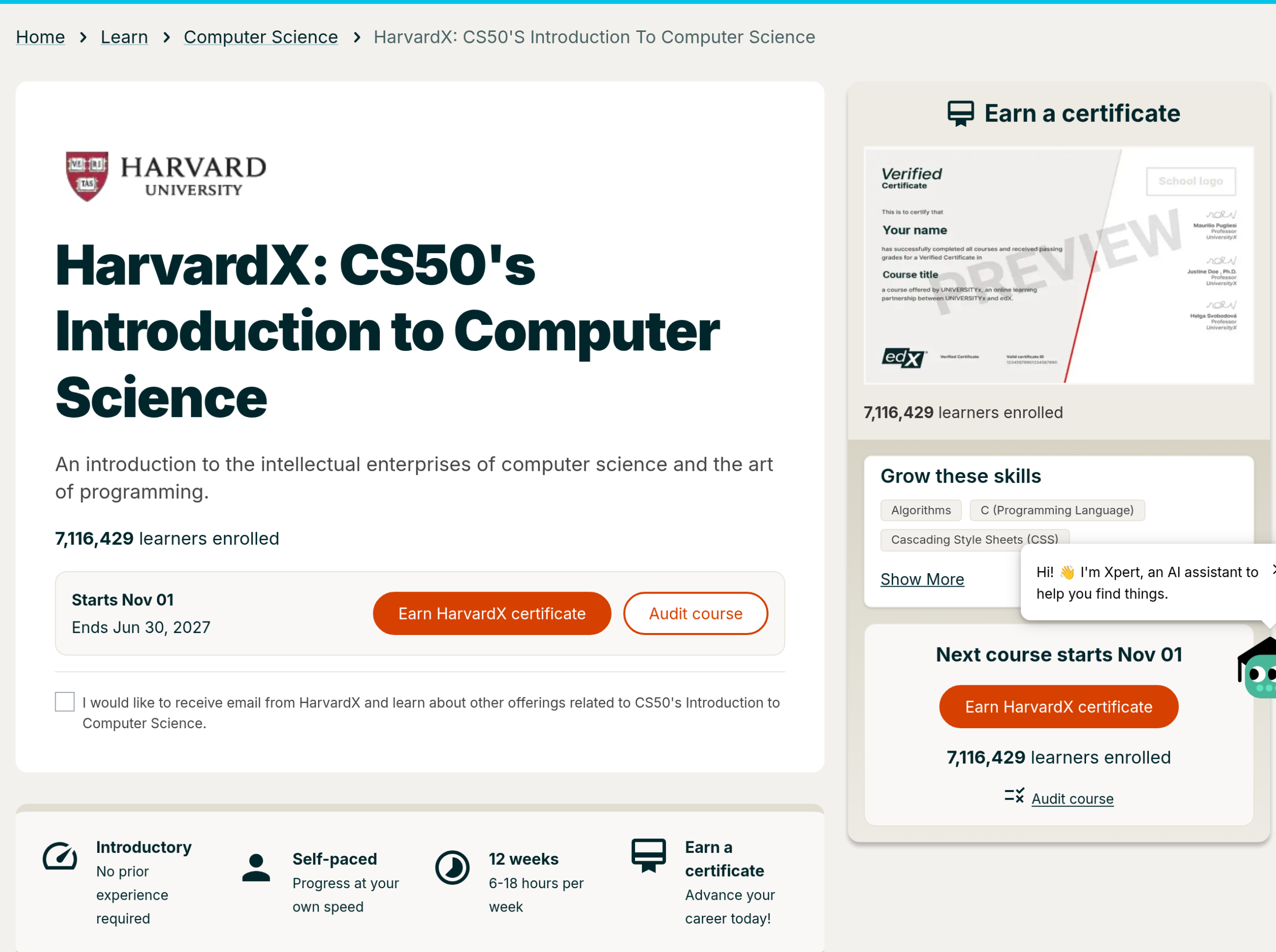
3. Harvard Free Courses: Best Free Computer Science Start
Harvard lists 124 free online courses in its catalog, including the famous CS50x Introduction to Computer Science, CS50’s web programming course and Data Science: R Basics. The CS50 courses are some of the most respected free programming classes anywhere, combining lectures, weekly problem sets and a project you design yourself.
You can take the course material for free. Certificates, where offered, are a paid option, often through edX. If you just want to learn to code properly, CS50x is one of the best free starting points there is.
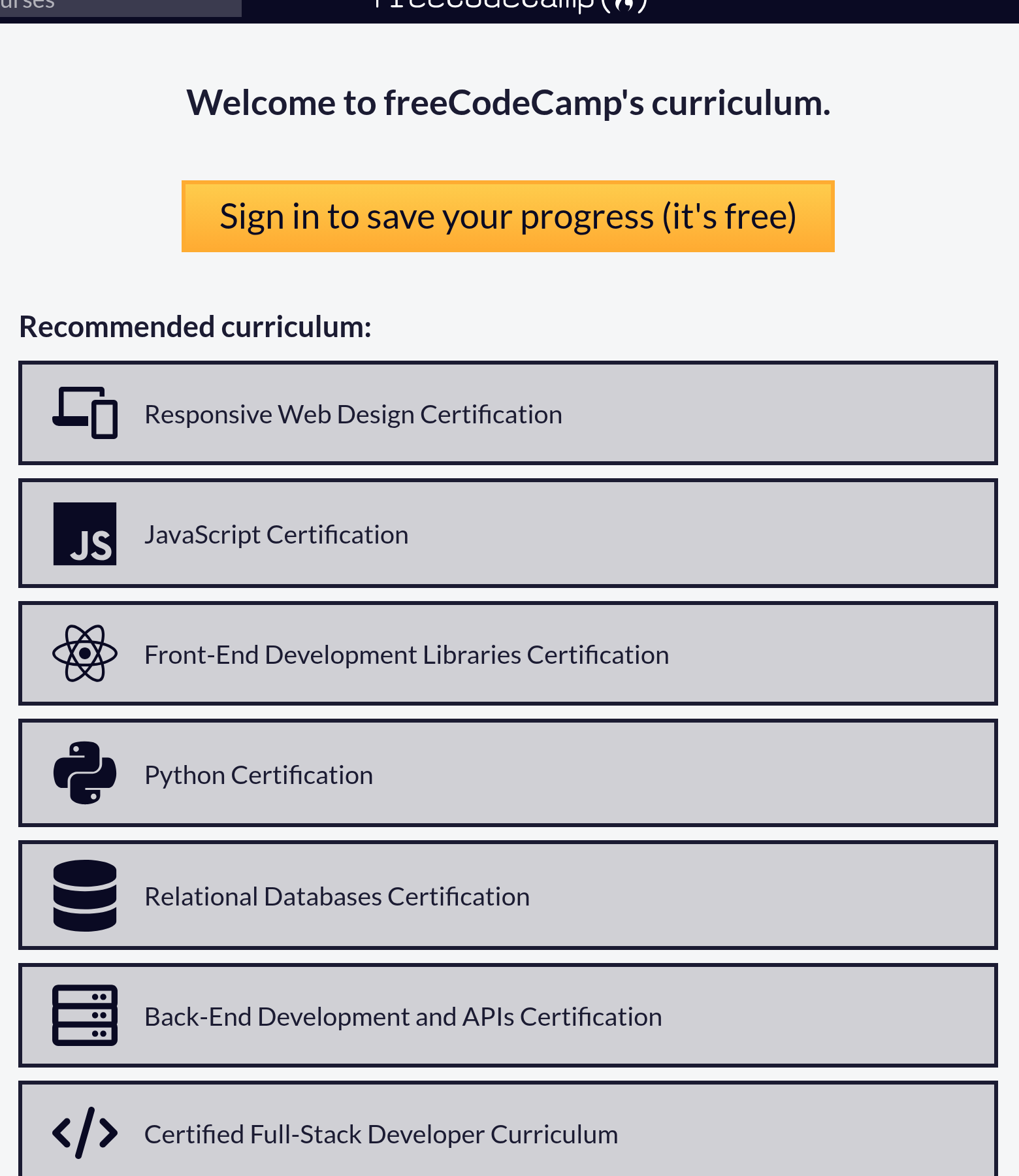
4. freeCodeCamp: Best Free Certificates in Coding
freeCodeCamp is a nonprofit that teaches web development, JavaScript, Python, data analysis and more through interactive lessons and required projects. Each certification leads to a free certificate once you finish its projects. Nothing is behind a paywall.
The projects are the point. By the end of a certification, you’ve built several working programs you can show employers, which counts for far more than the certificate itself.
5. Kaggle Learn: Best for a Quick Start in Data Science
Kaggle, owned by Google, offers no-cost courses on Python, pandas, data visualization, machine learning and SQL. Each one is short, built around hands-on coding exercises in the browser, and you can earn a free certificate for finishing.
It’s ideal if you already know some basics and want practical data skills fast. It won’t teach you programming from zero, so pair it with freeCodeCamp or CS50 if you’re brand new.
6. HubSpot Academy: Best Free Marketing Certificates
HubSpot Academy is completely free and online, with free certifications in subjects like social media marketing, digital marketing, inbound sales and revenue operations. Most take two to seven hours, and you earn the certificate by passing an exam.
The certificates are well known in marketing, especially at companies that use HubSpot. Some courses lean toward HubSpot’s own software, so pick the general marketing ones if you’re not a HubSpot user. Google’s free Skillshop training, which includes Google Ads certification, is a good companion.
7. Saylor Academy: Best Free College-Style Courses
Saylor Academy offers more than 160 free courses in subjects like business, computer science, economics and English, structured like college classes. You can earn a free certificate by passing a course’s final exam, and some courses can count toward college credit at partner schools.
The courses rely more on readings than video, which suits some learners and loses others. For a free, structured version of a general education class, though, it’s one of the best options available.
8. OpenLearn: Best Short Free Courses With Badges
OpenLearn is run by the UK’s Open University, and it offers hundreds of free short courses. Most come with a free digital badge or a statement of participation when you finish. Topics range from psychology and history to science, nature and money.
The courses are shorter and lighter than university classes, which makes them easy to finish. Some content uses UK examples, but most topics translate fine for US learners.
9. edX: Best for Free University Lectures
edX hosts courses from Harvard, MIT and many other universities. Most still have a free audit option that includes video lectures and readings, but audit access is time-limited, and graded assignments and certificates require payment. A verified certificate typically costs $50 to $300 per course.
MIT’s own statement on the change explains that in many MITx courses, graded quizzes and exams are only available on the verified track. So use edX free for the lectures, and don’t count on finishing a course for free.
10. Alison: Best for a Wide Range of Practical Skills
Alison lists more than 6,000 free online courses and says it has reached over 50 million learners. The catalog covers business, IT, health, languages and personal development, with many short courses aimed at workplace skills.
The courses are free, but the free version shows ads, and Alison sells certificates and diplomas separately along with an ad-free Premium plan. Quality varies more than on university platforms, so check a course’s reviews first.
11. Coursera: Best for Trying a Course Before Paying
Coursera used to be the go-to free option. That ended in August 2025, when free audit gave way to a preview limited to the opening module. To go further, you need a subscription or financial aid, which Coursera still offers to eligible learners for full courses and certificates.
It’s still worth knowing. The preview is a good way to test a course from Google, IBM or a university before paying, and financial aid makes Coursera free in practice for those who qualify.
12. LinkedIn Learning Through Your Library: Best Hidden Free Option
LinkedIn Learning is normally a paid subscription, but many US public libraries offer it free with a library card. The St. Tammany Parish Library in Louisiana, for example, provides it “for free to all card holders,” with access to over 16,000 courses.
Search your library’s website for “LinkedIn Learning” or ask at the front desk. If your library has it, you get a huge catalog of business, tech and creative courses without paying anything.
Match a Free Platform to What You Want to Learn
You want to learn to code
Start with Harvard’s CS50x, then build projects with freeCodeCamp.
You need a free certificate for your resume
freeCodeCamp for tech, HubSpot Academy for marketing, Saylor Academy for general subjects.
You need to brush up on math
Khan Academy, at whatever level you left off.
You want a real university course
MIT OpenCourseWare for full course materials, or edX audit for lectures.
You want data science skills fast
Kaggle Learn, after a few weeks of basic Python.
You want business or creative skills
Check your library for LinkedIn Learning, then try Alison.
Can a Free Certificate Help You Get a Job?
A free certificate can help, but it rarely gets you hired on its own. Recruiters want evidence of skill, not just completion. A HubSpot certificate next to a marketing campaign you ran, or a freeCodeCamp certificate next to projects on GitHub, makes a much stronger case than either piece alone.
The certificates that carry the most weight are those tied to a recognized name and a real test, like HubSpot’s exams or Google’s Skillshop certifications for Google Ads. Completion badges from short courses are better treated as personal milestones. List them on LinkedIn if you like, but lead with what you built or did.
Planning a career change that calls for a well-known credential? Use a free course to test the field first. Then consider a paid program, like a Google certificate on Coursera, once you know it’s the right direction.
How to Actually Finish a Free Course
The hardest part of a free course is finishing it, because there’s no money on the line to keep you going. A few habits help:
- Pick one course at a time. Enrolling in five at once is the fastest way to finish none.
- Put study time on your calendar. Two fixed hours a week beats “whenever I have time.”
- Choose courses with projects or exams. A clear finish line gives you something to work toward.
- Tell someone your goal. A friend checking in once a week adds the accountability a free course lacks.
- Use what you learn right away. Apply a lesson at work or in a small project the same week.
FAQs About Free Online Courses
What is the best website for free online courses?
It depends on the subject. Khan Academy is best for school-level subjects, MIT OpenCourseWare and Harvard for university material, freeCodeCamp for coding and HubSpot Academy for marketing.
Which free online courses give free certificates?
freeCodeCamp, HubSpot Academy, Kaggle Learn and Saylor Academy offer free certificates, and OpenLearn gives free badges or statements of participation. edX, Alison and Coursera charge for certificates, though Coursera offers financial aid.
Are Coursera courses still free?
Only partly. Since August 2025, Coursera lets you preview a course’s first module for free. To complete the course and get a certificate, you need to pay or qualify for financial aid.
Are free online courses worth it?
Yes, if you pick well-built courses and finish them. Many free courses, like Harvard’s CS50x and MIT’s OpenCourseWare, use the same material as paid university classes.
Can I get college credit from free online courses?
Sometimes. Saylor Academy has courses that can count toward credit at partner schools. Most other free courses, including MIT OpenCourseWare, don’t offer credit.
Bottom Line: Where to Start Learning for Free
Start with the platform that matches your goal, and finish one course before starting another. For coding, take Harvard’s CS50x and then build projects on freeCodeCamp. For math and science, use Khan Academy. For a free certificate in marketing, go to HubSpot Academy.
Check your local library for free LinkedIn Learning access too. It’s one of the most overlooked free resources out there, and it takes five minutes to find out whether you have it.
You reached the last module. 3 in 100 do.
Keep going in Learning Platforms:
TopicLearning Platforms