
On this page
- Coursera vs Udemy: Side-by-Side Comparison
- Does the Coursera and Udemy Merger Change Anything for You?
- Which Is Cheaper, Coursera or Udemy?
- Are Coursera Certificates Worth More Than Udemy Certificates?
- Which Has Better Course Quality?
- Can You Use Coursera or Udemy for Free?
- Which Has the Better Refund Policy?
- Which Is Easier to Stick With?
- Is Coursera or Udemy Better for Learning to Code?
- Which Has More Courses, Coursera or Udemy?
- What Do Learners Complain About on Each Platform?
- Coursera or Udemy: Which Should You Choose?
- What Are the Alternatives to Coursera and Udemy?
- Coursera vs Udemy FAQs
- Our Verdict: Coursera or Udemy?
Coursera vs Udemy comes down to proof versus price: Coursera sells certificates from universities and companies through a $59-a-month subscription, while Udemy sells single practical courses that often cost under $15 on sale. If you need something to show an employer, Coursera is the stronger pick. If you need to learn a tool by Friday, Udemy usually gets you there for less.
There’s a twist this year. Coursera now owns Udemy. The all-stock merger closed on May 11, 2026, and Udemy became a wholly owned subsidiary of Coursera, Inc. As of October 2026, though, the two sites still run separately, with their own prices, catalogs, refunds and certificates. So the choice is still a real one, and it’s mostly about what you need at the end of the course.
Pick by what you need the course to do for you.
Best for a credential employers know
Coursera
Courses and Professional Certificates from universities and companies, with graded work and deadlines.
$59 a month or $399 a year
Best for cheap, hands-on skills
Udemy
Single courses you own for life, taught by working practitioners, with a 30-day refund window.
Courses from $14.99 on sale
Coursera vs Udemy: Side-by-Side Comparison
Coursera and Udemy differ most in who makes the courses and how you pay for them. Here’s the full picture in one table:
| Coursera | Udemy | |
|---|---|---|
| Who teaches | Universities and companies such as Google and IBM | Independent instructors on an open marketplace |
| How you pay | Coursera Plus subscription, or per program | Per course, or the Personal Plan subscription |
| Subscription price | $59 a month or $399 a year | Personal Plan from $13 a month |
| Single course price | Varies by program | Sale prices from $14.99 |
| Free option | First module of nearly every course | Some free courses, without certificates |
| Free trial | 7 days on monthly Coursera Plus | Not listed for the Personal Plan |
| Refunds | Annual Plus: cancel within 14 days | Single courses: 30 days |
| Certificate | Co-branded by the university or company | Certificate of completion, not accredited |
| Access after you stop paying | Ends with your subscription | Bought courses: lifetime. Personal Plan: ends |
Try Coursera Plus free for 7 days Browse Udemy
Does the Coursera and Udemy Merger Change Anything for You?
The Coursera and Udemy merger hasn’t changed anything for learners yet. When the deal closed, the companies said access, subscriptions and pricing stayed the same on day one, and no timeline has been given for platform integration. Udemy instructors also kept their existing contracts and revenue terms.
The combined company is large. It reported about 290 million learners, more than 315,000 courses and 95,000 content creators. Coursera has said a combined catalog and new AI tools will arrive “over time,” with updates on its blog.
What this means in practice: buy whatever fits your goal today, but don’t prepay for years. If the two catalogs merge into one subscription, a long Udemy course collection or a multi-year plan could end up overlapping. I’d stick to one year or less on either site until the integration plan is public.
Which Is Cheaper, Coursera or Udemy?
Udemy is cheaper for most people, because you can buy one course during a sale and own it for life. Coursera only becomes the better deal when you’ll finish several courses, or a full certificate program, within your subscription.
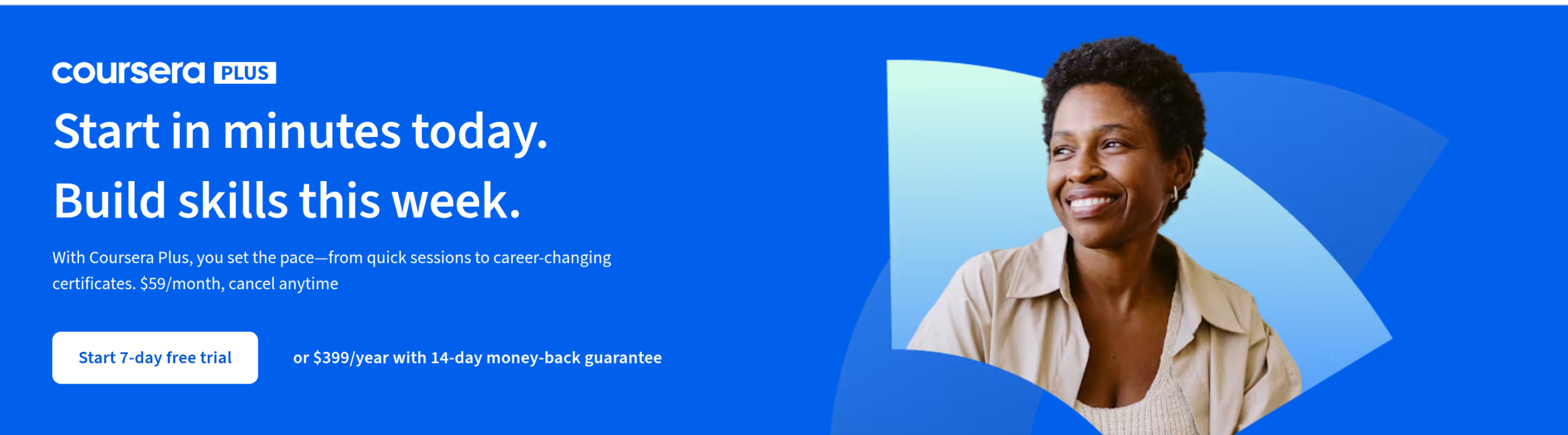
Coursera’s prices. Coursera Plus costs $59 a month or $399 a year and covers over 90% of the courses, Projects, Specializations and Professional Certificates on the site. The monthly plan starts with a 7-day free trial.
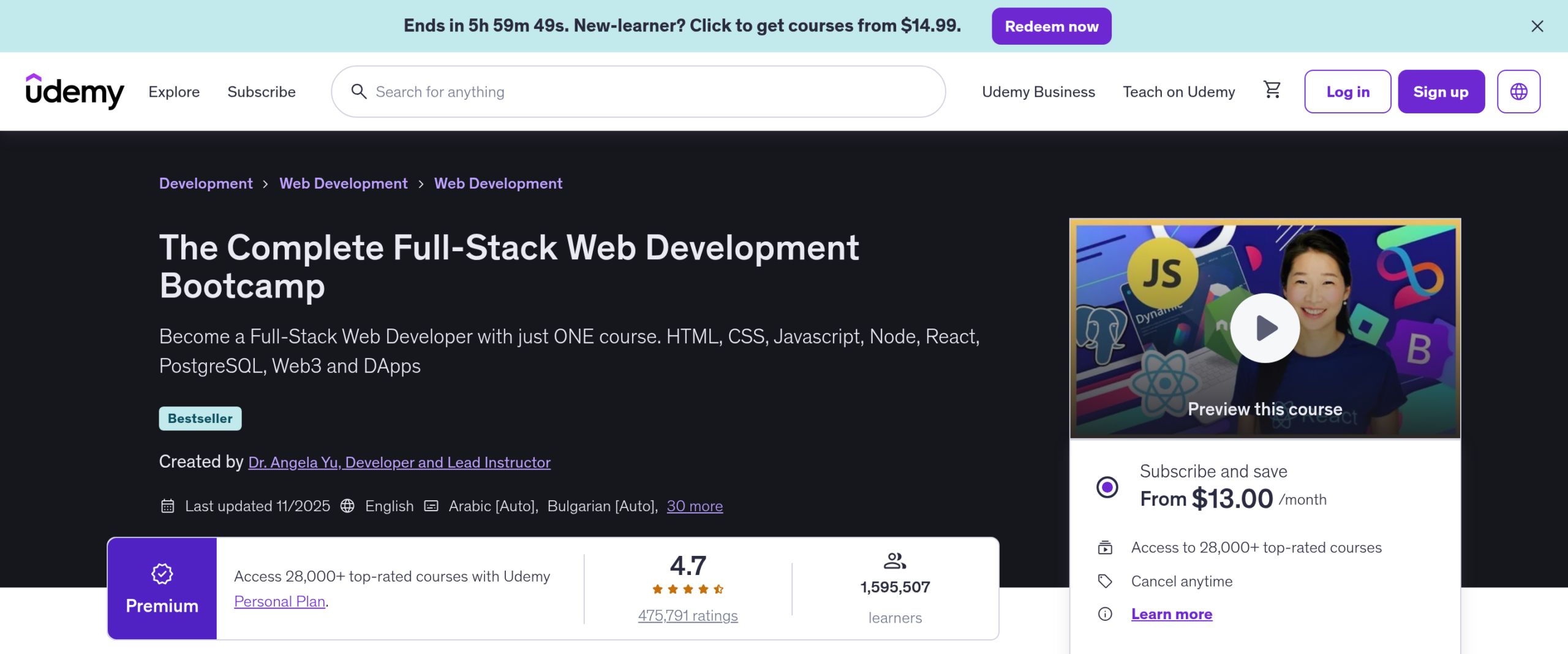
Udemy’s prices. Udemy courses swing between list prices and frequent sales. In early November 2026, Udemy’s site showed sale courses from $14.99 and the Personal Plan from $13 a month. The Personal Plan gives you a large subset of the catalog for as long as you subscribe.
The useful question is when each option pays off. Here’s the break-even math, using those prices:
| If you’re deciding between | The pricier option wins when |
|---|---|
| Coursera Plus monthly vs annual | You’ll need 7 or more months ($399 is less than 7 × $59) |
| Udemy single courses vs Personal Plan | You’d buy 11 or more sale courses a year ($156 vs $14.99 each) |
| Udemy single courses vs Coursera Plus annual | You’d otherwise buy 27 or more sale courses a year |
| Coursera Plus monthly for a 3-month certificate | Always: $177 beats the $399 annual plan |
Most learners finish far fewer than 11 courses a year. If that’s you, buying the few Udemy courses you need on sale is the cheapest route. And if you’re aiming for one Coursera certificate, pay monthly, work steadily, and cancel when you finish.
Are Coursera Certificates Worth More Than Udemy Certificates?
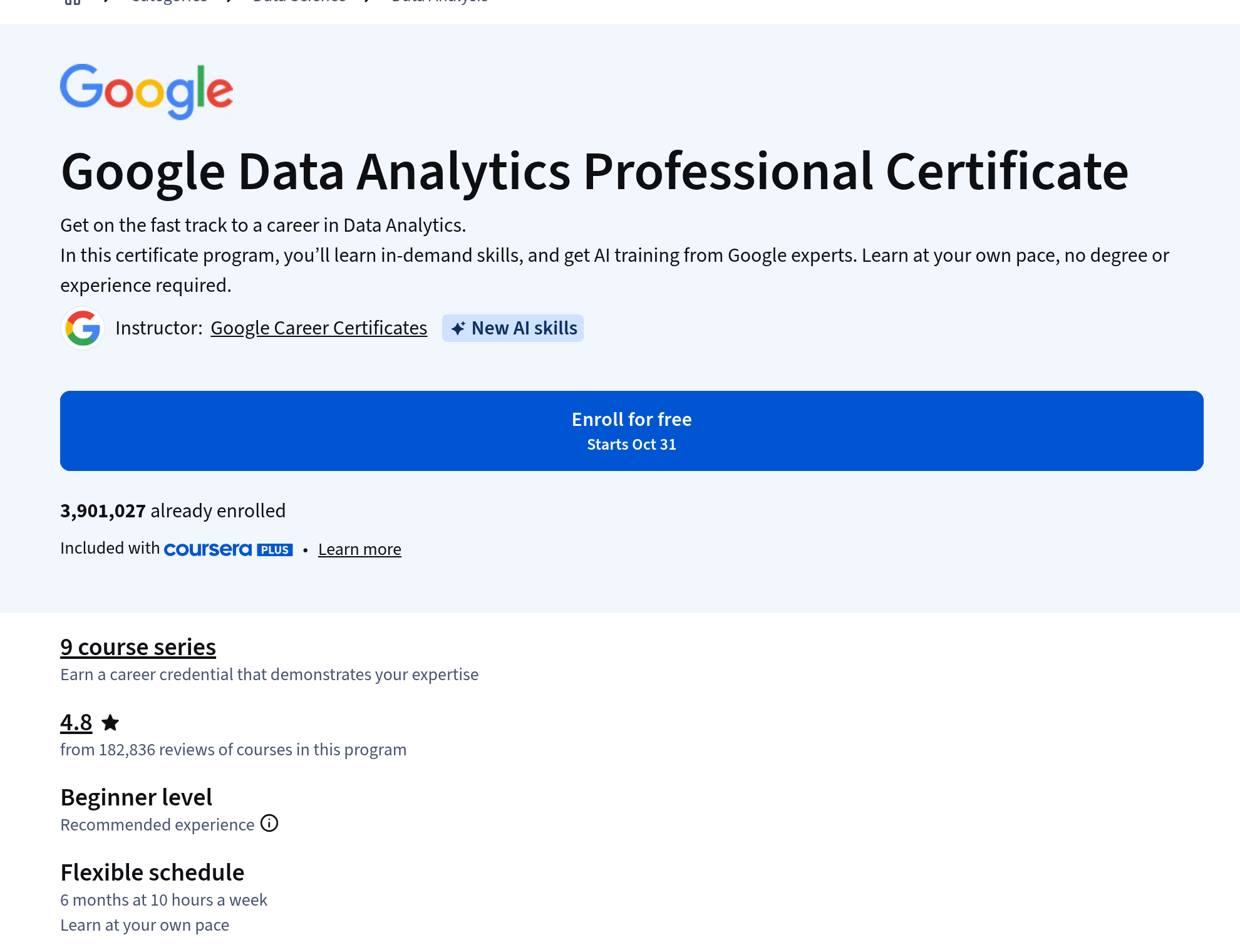
Yes, Coursera certificates generally carry more weight with employers than Udemy certificates. A Coursera certificate is co-branded by the university or company behind the course, such as a Google or IBM Professional Certificate, and the course usually includes graded assignments. A Udemy certificate shows that you completed a course on Udemy, and it isn’t accredited.
That said, neither certificate replaces proof of skill. Hiring managers for technical roles tend to care more about a project you built, a portfolio or a technical interview than about the certificate line on your resume. A Coursera certificate helps most when you’re changing careers and need a recognizable name to get past the first screen. A Udemy course helps most when you already have the job and need a specific skill fast.
Which Has Better Course Quality?
Coursera has more consistent course quality, while Udemy has a wider range, from excellent to forgettable. That difference comes straight from how each platform gets its courses.
Coursera works with partner universities and companies, so courses tend to follow a syllabus with readings, quizzes, peer-reviewed or auto-graded assignments and suggested deadlines. It feels like a structured class. The trade-off is pace. Some lectures are recorded academic sessions that move slower than a practitioner would.
Udemy is an open marketplace where independent instructors publish and price their own courses. The best ones are taught by working developers, designers and marketers who show you exactly how they do the job. Others are thin or out of date. Learners who use Udemy regularly tend to vet a course before buying by checking the rating, the number of reviews, the last-updated date and the free preview lessons.
Can You Use Coursera or Udemy for Free?
You can use both for free, but only in limited ways, and neither gives a certificate without paying.
- Coursera replaced its old free audit option in August 2025. Now you can preview the first module of nearly every course for free, including graded assignments where offered. Financial aid is still available for eligible learners, and it can unlock the full course and certificate.
- Udemy has a selection of free courses, usually shorter ones, without certificates or instructor Q&A. Paid courses also show free preview lessons before you buy.
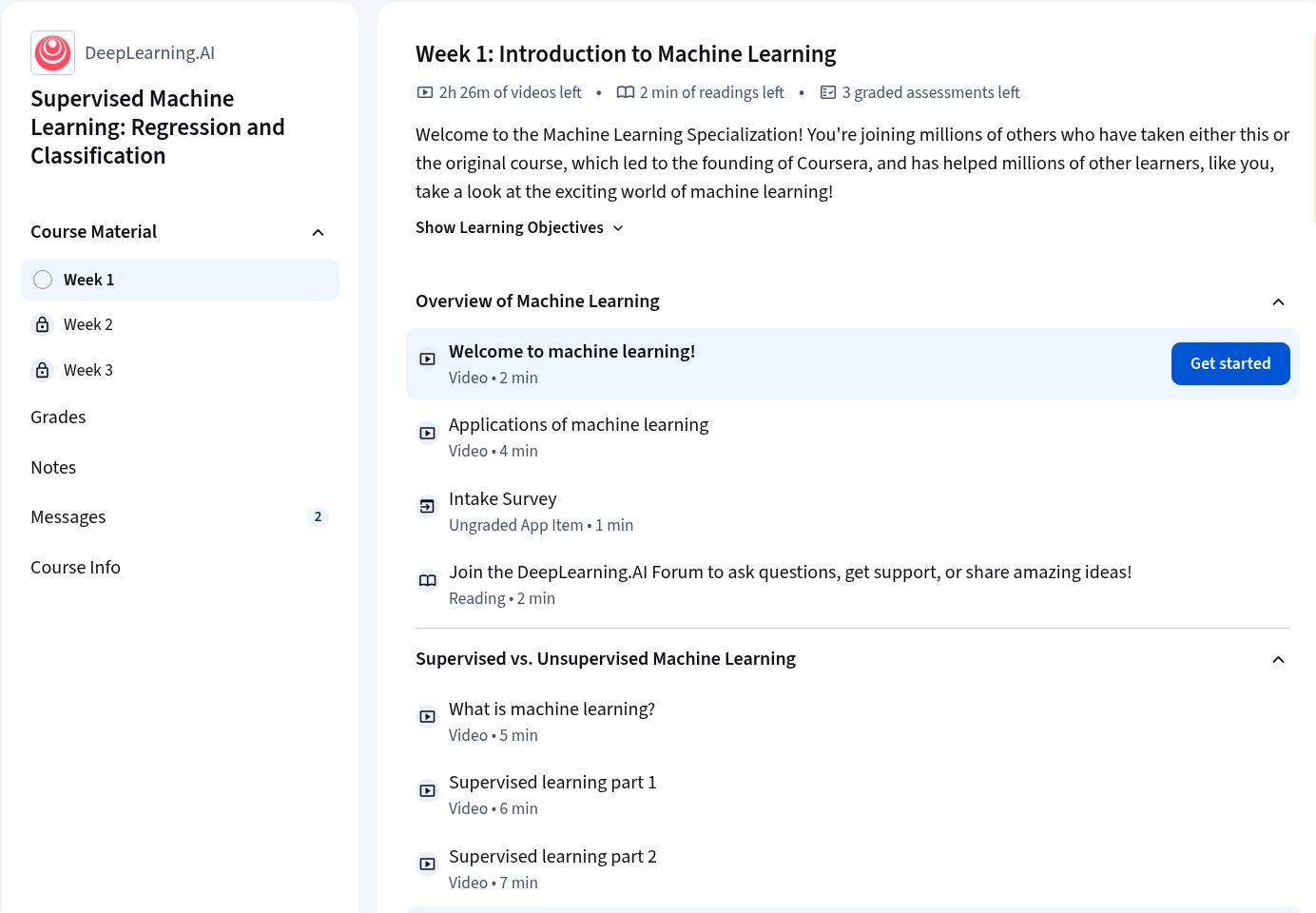
The end of free audits drew plenty of complaints in learner forums such as DeepLearning.AI’s community, where people pointed out that whole courses used to be free to watch. If you only want the lectures and not the certificate, Coursera is less generous than it was a couple of years ago.
Which Has the Better Refund Policy?
Udemy has the friendlier refund policy for single courses, while Coursera is clearer about subscriptions. Here’s how each works:
- Udemy single courses: eligible courses can be refunded within 30 days. Udemy can refuse requests it sees as refund abuse, and Apple purchases may be refunded as Udemy credit instead of cash.
- Udemy subscriptions: the Personal Plan doesn’t come with the 30-day guarantee. Whether you can get money back depends on local consumer law, and requesting a refund cancels the plan.
- Coursera Plus annual: Coursera’s terms say you must cancel within 14 days to receive a refund, and renewal charges aren’t refunded.
- Coursera Plus monthly: the 7-day free trial is your safety net. Cancel before it ends and you aren’t charged.
So test before you commit. Use Coursera’s trial week or first free module, and watch Udemy’s free preview lessons before you buy.
Which Is Easier to Stick With?
Coursera is easier to stick with if you need structure, and Udemy is easier if you need flexibility. Coursera courses have suggested deadlines, graded work and, in many programs, discussion forums, which give you a reason to keep going each week. Udemy courses are self-paced video lessons you can start, pause and pick up any time, which suits busy schedules but makes it easy to drift.
The Udemy ownership model also changes your motivation. A course you bought for $13 and own forever has no deadline at all, and many learners admit to a library of half-finished courses. A Coursera subscription that bills every month creates its own nudge to finish.
Is Coursera or Udemy Better for Learning to Code?
For learning to code, Udemy is usually better for practical, build-it-now skills, and Coursera is better for computer science foundations and a credential. The two platforms approach programming from opposite ends.
Udemy’s strongest coding courses are long, project-based courses taught by working developers. You follow along, write the code yourself and finish with a working app or website. They’re updated by the instructor when frameworks change, so check the “last updated” date before you buy. Coursera’s coding programs lean on university courses that explain algorithms, data structures and the theory behind the code, plus company certificates in areas like IT support, data analytics and front-end development.
A common path is to use both: a Coursera program for the fundamentals and the credential, and a Udemy course when you need to get productive in a specific framework fast.
Which Has More Courses, Coursera or Udemy?
Udemy has far more courses, because anyone can publish one. Together the two companies now list more than 315,000 courses, and Udemy’s open marketplace makes up most of that number. Coursera Plus, by comparison, advertises access to 10,000+ online courses and programs.
More isn’t automatically better. On Udemy you might find 50 courses on the same spreadsheet tool, and picking the right one takes some research. Coursera’s smaller catalog is easier to browse, but you may not find a niche software topic at all.
What Do Learners Complain About on Each Platform?
Learners who review the two platforms on Trustpilot, Reddit and app stores raise different complaints about each one.
- Udemy: uneven course quality, courses that fall out of date, and “sales” that run so often the list price feels meaningless. Some subscribers also report surprise renewal charges on the Personal Plan.
- Coursera: the price of Coursera Plus, the loss of free audit access, and slow or inconsistent peer grading on some assignments.
Neither set of complaints is a dealbreaker, but each tells you where to be careful. Vet Udemy courses before buying, and plan your Coursera months so you’re not paying while you’re too busy to study.
Coursera or Udemy: Which Should You Choose?
Choose based on the outcome you need, not the platform’s reputation. These six situations cover most learners:
You’re changing careers into tech, data or marketing
Coursera. A Professional Certificate from Google, IBM or Meta gives a recognizable credential while you build projects.
You need one tool for your current job
Udemy. Buy a highly rated, recently updated course on sale and finish it this month.
You want university-level theory
Coursera. Courses from universities like Yale and Michigan go deeper into the why.
You’re on a tight budget
Udemy single courses, or Coursera’s free first modules plus financial aid if you need the certificate.
You’ll take many short courses this year
Run the break-even math above. Thirteen or more courses a year makes Udemy’s Personal Plan cheaper than buying one by one.
Your employer pays for learning
Check which one your company already licenses. Many offer Coursera for Business or Udemy Business at no cost to you.
What Are the Alternatives to Coursera and Udemy?
If neither fits, three platforms cover the gaps. edX is the closest match to Coursera, with university courses and certificates. LinkedIn Learning suits professionals who want short business and software courses tied to their LinkedIn profile. Skillshare, at $167.88 a year, focuses on creative, project-based classes in design, illustration and video.
Coursera vs Udemy FAQs
Is Coursera better than Udemy?
Coursera is better for recognized certificates and structured learning. Udemy is better for cheap, practical courses you can finish fast.
Does Coursera own Udemy now?
Yes. Coursera completed its all-stock merger with Udemy on May 11, 2026, but the two platforms still run separately for now.
Are Udemy certificates recognized by employers?
Udemy certificates aren’t accredited. They show completion, so pair them with a project or portfolio that proves the skill.
Is Coursera free?
Partly. You can preview the first module of nearly every course free, and financial aid can cover full access for eligible learners.
Which is cheaper for one course?
Udemy, by a wide margin. A sale course from $14.99 costs less than a single month of Coursera Plus at $59.
Our Verdict: Coursera or Udemy?
Pick Coursera if you need a credential that an employer will recognize, especially if you’re switching careers. Pay monthly, aim to finish one certificate in three to six months, and cancel when you’re done.
Pick Udemy if you need a practical skill for the job you already have. Wait for a sale, buy one well-reviewed course that was updated recently, and finish it before buying another. With the merger still unfolding, I wouldn’t lock into more than a year on either platform right now.
You reached the last module. 3 in 100 do.
Up next for Coursera:
ReviewCoursera Review 2026: What You Get, What It Costs and Who Should Skip It