
A strong, low-cost pick for illustration, design, photography and video, where every class ends in a project. Weaker for business, writing, music or tech after the 2026 cuts.
- Catalog quality 25%6.5
- Learning experience 20%7.5
- Value for money 20%7.5
- Certificates and outcomes 15%2.5
- Apps and usability 10%8.0
- Support and refunds 10%5.0
- Hands-on project in almost every class
- Deep creative catalog from working professionals
- About $13.99 a month on the annual plan
- Offline viewing in the mobile apps
- Seven categories closed to new teachers in 2026
- Teaching quality varies a lot between classes
- No refunds on renewals and a 48-hour trial refund window
- No credential that employers recognize
On this page
- How Skillshare Works
- Skillshare Pricing and Free Trial in 2026
- The 2026 Catalog Shake-Up: Which Categories Are Growing
- What Skillshare Does Well
- Where Skillshare Disappoints
- How to Pick a Good Skillshare Class
- Skillshare for Teams
- Skillshare’s Refund Rules, Explained
- Is Skillshare Worth $168 a Year?
- Skillshare vs MasterClass vs Udemy
- Who Should Join Skillshare, and Who Shouldn’t
- Skillshare Review FAQs
- Bottom Line on Skillshare
This Skillshare review starts with a change most other reviews haven’t caught up with: in 2026, Skillshare stopped accepting new teachers in seven of its sixteen categories and began trimming content there. It’s now clearly a creative-skills platform. For illustration, design, photography, video and crafts, it’s still one of the best-value subscriptions around at $167.88 a year. For business, writing, music or coding, it’s a weaker bet than it used to be.
Below, you’ll find how Skillshare works, what it costs, which parts of the catalog are growing or shrinking, how its strict refund rules work and who should sign up. Everything here comes from Skillshare’s help center, its own announcement of the category changes and what members repeatedly report, as of November 2026. On our learning platform rubric, Skillshare scores 6.3 out of 10, and the full breakdown is in the verdict panel above.
- Price: $167.88 a year, about $13.99 a month when billed annually.
- Trial: usually 7 days, sometimes longer through promotions. A card is required.
- Format: short video lessons with a hands-on project in almost every class.
- Strongest in: art, illustration, design, animation, photography, film and crafts.
- Watch out for: no refunds on renewals, and a 48-hour refund window after a 7-day trial converts.
How Skillshare Works
Skillshare is a subscription library of video classes, most of them taught by working creatives rather than universities or celebrities. One membership unlocks every class. Classes are split into short lessons, and many can be finished in an afternoon.
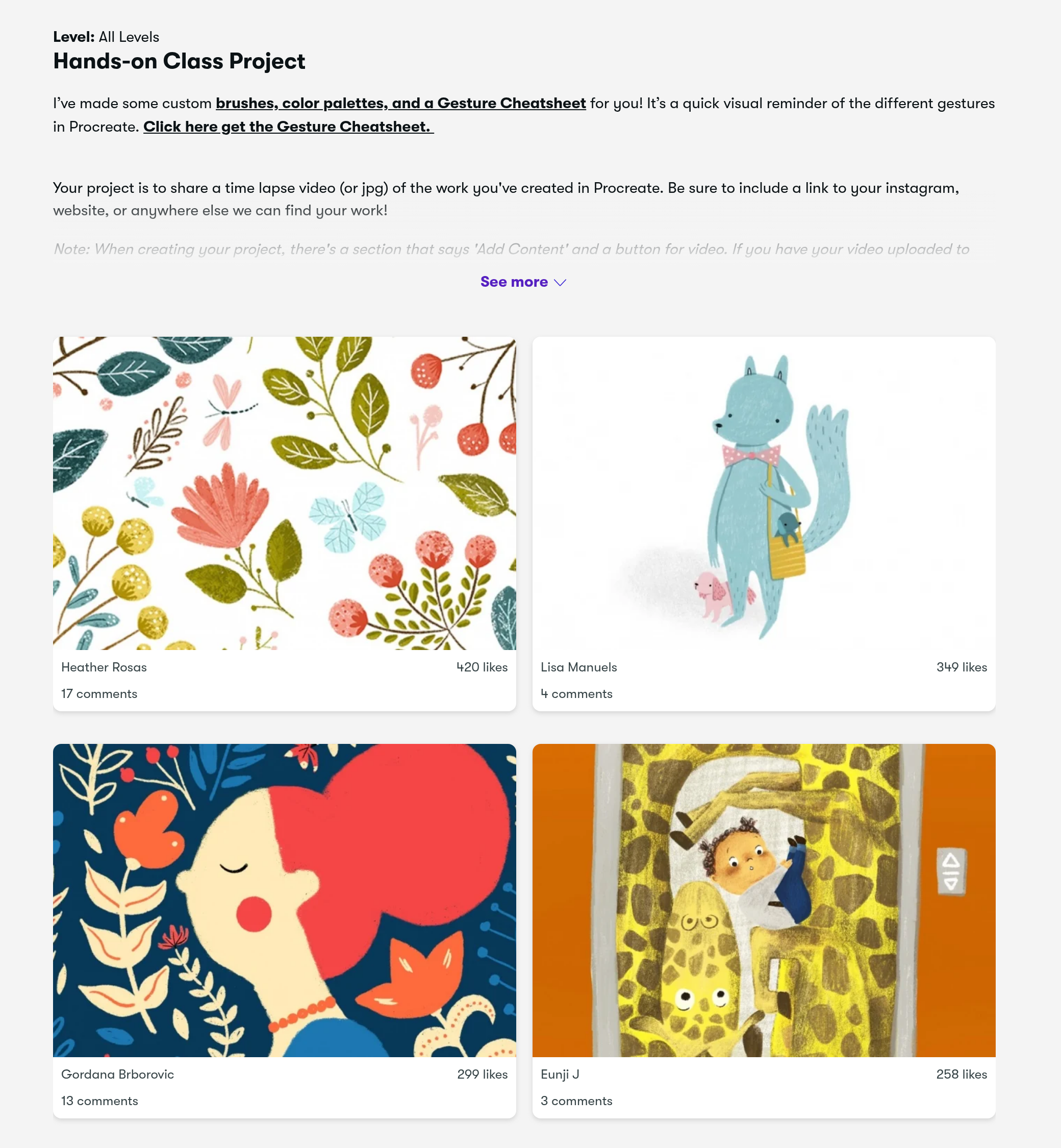
The defining feature is the class project. Nearly every class ends with something to make: a logo, an illustration, a short film, a photo series or a product mockup. Students post their projects in a class gallery, where the teacher and other students can comment. That’s what separates Skillshare from passive video libraries. You’re expected to create something, not just watch.
The membership also includes offline viewing in the mobile apps, subtitles and transcripts, according to Skillshare’s help center.
Skillshare Pricing and Free Trial in 2026
| Option | Price | Notes |
|---|---|---|
| Annual membership | $167.88 a year | About $13.99 a month, billed upfront |
| Monthly membership | About $32 a month where offered | Costs more than double the annual rate over a year |
| Teams | $159 per user per year | For companies buying seats |
| Free trial | $0 | Usually 7 days; longer promotional trials appear at times |
These are reported prices from September 2026. Skillshare didn’t show prices to us without signing in. Skillshare itself says prices vary by region and points members to its pricing page, so confirm the number at checkout.
For most people, annual billing is the only plan that makes sense. Monthly billing costs roughly $384 over twelve months, more than twice the annual price.
The 2026 Catalog Shake-Up: Which Categories Are Growing
In mid-2026, Skillshare announced it was “shifting our focus from catalog size to a smaller set of engaged teachers”. Seven categories stopped onboarding new teachers, and Skillshare said content in those areas would be reduced. It also tightened the rules for paying teachers, so less active teachers no longer earn royalties.
Here’s how the categories now split, based on Skillshare’s official category list:
| Still open to new teachers | Closed to new teachers, being reduced |
|---|---|
| Art & Illustration | Development |
| Design | Marketing & Business |
| Animation & 3D | Writing & Publishing |
| Photography | Music & Audio |
| Film & Video | Personal Development |
| Crafts & DIY | Productivity |
| Creative Career | Home & Lifestyle |
| Creativity & Inspiration | |
| AI & Innovation |
What this means for you: classes in the left column should keep getting new material and active teachers. Classes in the right column will still be there for now, but expect fewer new releases and some removals. If you’re joining mainly for business, writing or music classes, check that the specific classes you want exist and were updated recently.
What Skillshare Does Well
- Learning by making. Class projects turn every lesson into practice, and many students build a small portfolio as they go.
- Creative depth. Illustration, design, hand lettering, animation and photography have a deep bench of classes from working professionals.
- Short, practical classes. You can learn one technique, like a Procreate brush workflow, in a single sitting.
- Low cost for frequent learners. At $13.99 a month, taking several classes a month costs very little per class.
- Offline viewing. Downloads in the mobile apps make it easy to learn on flights and commutes.
Where Skillshare Disappoints
- Uneven teaching quality. Anyone who meets Skillshare’s requirements can teach, so excellent classes sit next to thin ones. Check the review count and project gallery before you start.
- No credential that carries weight. Skillshare isn’t built around certificates. What you show employers is the work you made.
- Weak technical content. Development is now closed to new teachers, so coding and data classes are unlikely to improve.
- A shrinking non-creative catalog. Business, writing, music and productivity learners get less than they did a year ago.
- Strict billing rules. Renewals aren’t refunded, and the trial refund window is very short.
How to Pick a Good Skillshare Class
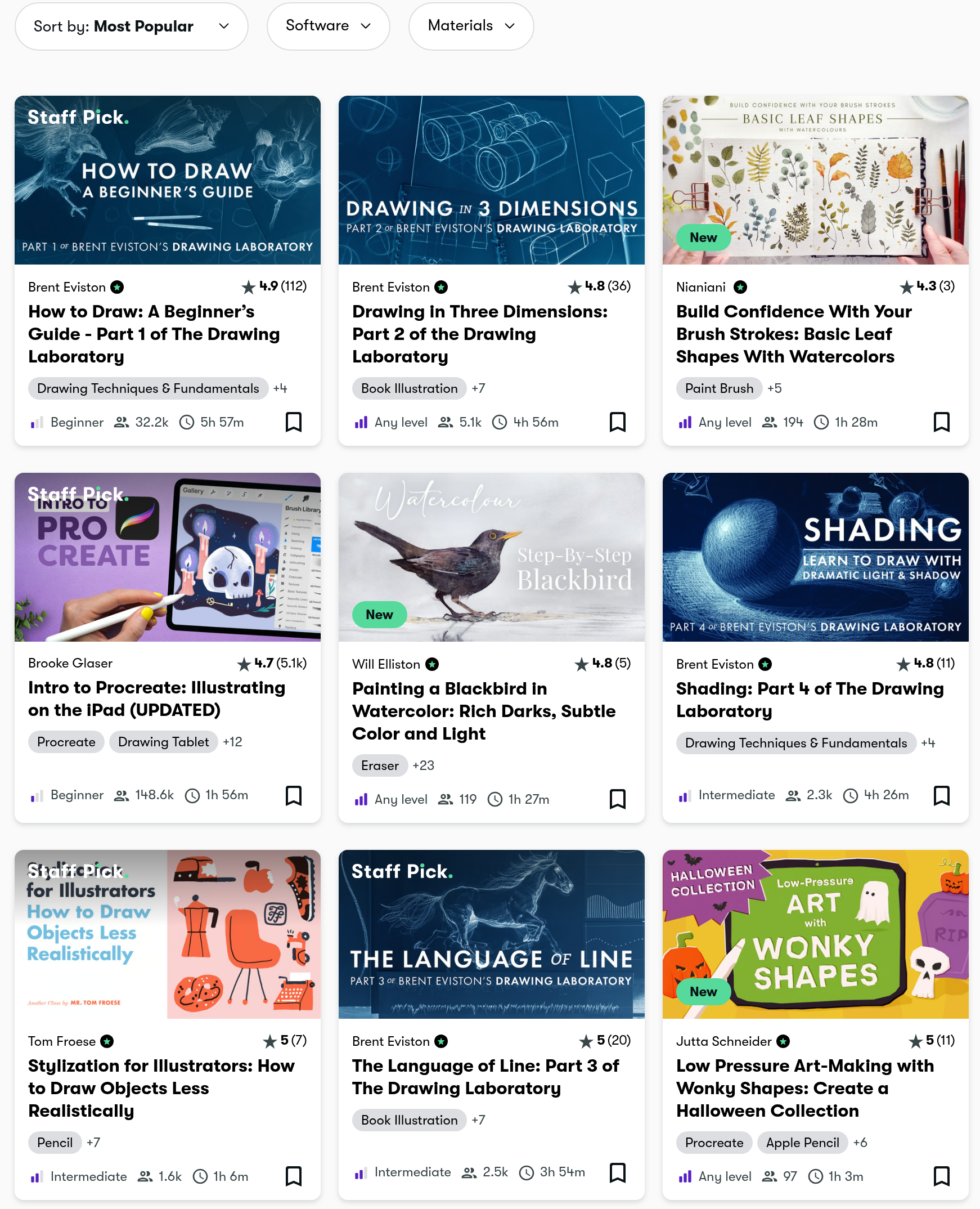
Because quality varies so much, a few minutes of checking before you start saves hours of mediocre lessons. Here’s what to look at on any class page:
- The project gallery. Lots of finished student projects means people actually completed the class and got something out of it.
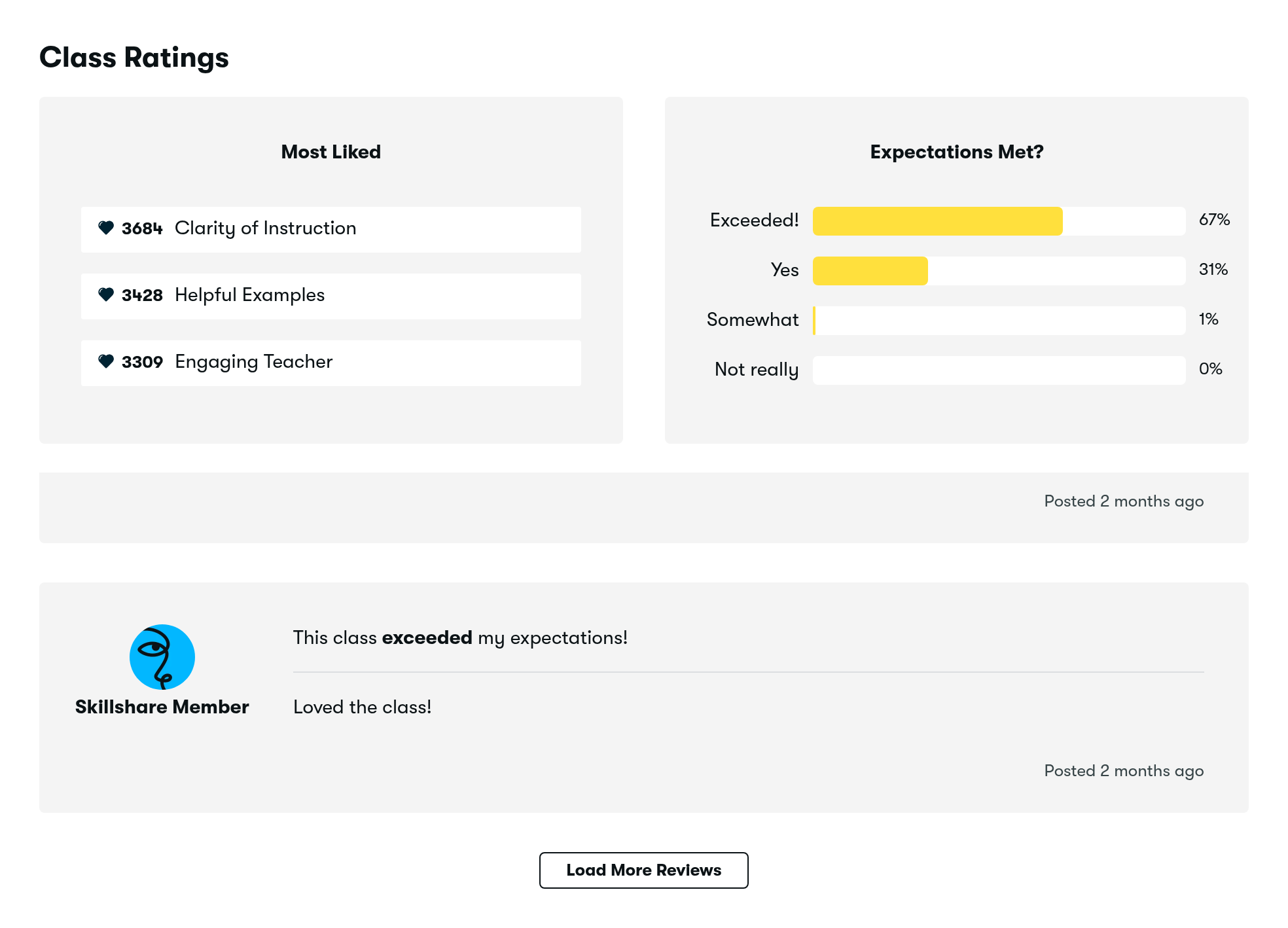
- Reviews and the “expectations met” share. Read the most recent reviews, not just the overall rating.
- The publish date. For software classes like Procreate, Photoshop or Premiere, anything more than a couple of years old may show an outdated interface.
- The teacher’s other classes. Teachers with a series of related classes and an active following tend to be more consistent.
- The first lesson. Watch the intro. If the teaching style doesn’t work for you in the first five minutes, it won’t get better.
Saving promising classes to a list and working through them in order also helps. Skillshare’s own Learning Paths group related classes, though they’re lighter than the structured tracks on course platforms.
Skillshare for Teams
Companies can buy Skillshare seats for staff at about $159 per user per year. It’s a reasonable perk for in-house design, marketing or content teams who need to keep creative software skills fresh. For technical upskilling, the 2026 category cuts make it a poor fit, and a platform with stronger tech content will serve a team better.
Skillshare’s Refund Rules, Explained
Skillshare’s billing policy is stricter than most learning platforms, and it’s behind many of the angry reviews you’ll see online. According to its refund policy:
- After a 7-day trial: you may get a refund if you contact support within 48 hours of being charged and haven’t used Skillshare since.
- After a trial of 14 days or longer: the first payment isn’t refundable.
- Renewals: never refunded, monthly or annual. Skillshare does send a reminder email before an annual renewal.
- App store purchases: Skillshare can’t refund or cancel them. You need to go to Apple or Google.
The practical rule is simple. Set a calendar reminder for the day before your trial ends, and decide then. If you subscribe, cancel from a web browser, since the help center says mobile users should cancel through account settings in a browser rather than in the app.
Is Skillshare Worth $168 a Year?
Skillshare is worth it if you’ll take at least one class a month in its creative categories. Here’s how the yearly price breaks down per class, compared with buying single courses on sale elsewhere for about $13 each:
| Classes you take in a year | Skillshare cost per class | Better deal |
|---|---|---|
| 4 | $41.97 | Buy single courses |
| 8 | $20.99 | Buy single courses |
| 13 | $12.91 | About even |
| 24 | $7.00 | Skillshare |
| 50 | $3.36 | Skillshare |
Because Skillshare classes are short, many creative learners take two or more a month without trying, which puts them comfortably in the bottom rows. If you only want one long, in-depth course on a single topic, a one-time purchase is usually the better buy.
Skillshare vs MasterClass vs Udemy
| Platform | Price | Learning style | Best for |
|---|---|---|---|
| Skillshare | $167.88 a year | Short classes with projects | Creative skills you practice |
| MasterClass | $120 to $240 a year | Filmed lessons from famous experts | Inspiration and perspective |
| Udemy | Pay per course; sale prices usually under $20 | Long, structured courses | Deep dives into one skill, including tech |
Choose Skillshare to make things, MasterClass to hear from the best in a field and Udemy when you need a long, structured course on one specific skill, especially a technical one.
Who Should Join Skillshare, and Who Shouldn’t
Good fit:
- Illustrators, designers, photographers and video creators building skills and a portfolio
- Hobbyists who want to try many crafts and creative tools without paying per course
- Freelancers who want short, practical lessons on creative software
Poor fit:
- Career changers who need a recognized certificate
- Anyone learning to code, analyze data or work in IT
- Learners joining mainly for business, writing or music classes, given the 2026 cuts
- People who tend to forget subscriptions, since renewals aren’t refundable
Skillshare Review FAQs
Is Skillshare legit?
Yes. Skillshare is a long-running online learning platform, founded in 2010, with tens of thousands of classes. The main complaints are about billing rules, not about the service being a scam.
How long is the Skillshare free trial?
Usually 7 days, and Skillshare sometimes runs longer promotional trials. You need to add a payment method, and you’re charged automatically when the trial ends unless you cancel first.
Can I get a refund from Skillshare?
Only in narrow cases. After a 7-day trial converts, you can request a refund within 48 hours if you haven’t used the service since. Renewals and payments after longer trials aren’t refundable.
Does Skillshare give certificates?
Skillshare isn’t designed around certificates, and nothing it issues carries weight with employers. Your class projects are the proof of what you learned.
Is Skillshare good for learning to code?
Not anymore. Development is one of the seven categories closed to new teachers in 2026. A coding-focused platform or a structured course will serve you better.
Bottom Line on Skillshare
Skillshare is a great deal for creative learners who like short, hands-on classes and will take at least one a month. Start with the free trial, pick two or three classes in illustration, design, photography or video, and finish their projects before the trial ends.
If you’re after business, writing, music or technical skills, look elsewhere. Those parts of Skillshare are shrinking, and other platforms now cover them better.
You reached the last module. 3 in 100 do.
Keep going in Learning Platforms:
TopicLearning Platforms