
On this page
- What Coursera Is in 2026 (and What Changed This Year)
- Coursera Pricing: Every Way to Pay
- What a Coursera Certificate Really Costs, by Goal
- Monthly or Annual: Picking Your Coursera Plus Plan
- What You Get Inside a Coursera Course
- What Learners Praise and Complain About
- Coursera Pros and Cons
- Who Coursera Suits, and Who Should Skip It
- Coursera Review Score: How the 4.1 Breaks Down
- Coursera Alternatives Worth a Look
- Coursera Review FAQs
- Bottom Line: Who Coursera Is Worth Paying For
This Coursera review comes down to one finding: Coursera is still the best place online to earn a certificate from a university or a company like Google, but it stopped being a great free resource when it replaced free audit with a short preview in 2025. If you want a credential and will study steadily, it’s worth paying for. If you mostly want to browse lectures for free, there are better homes for that now.
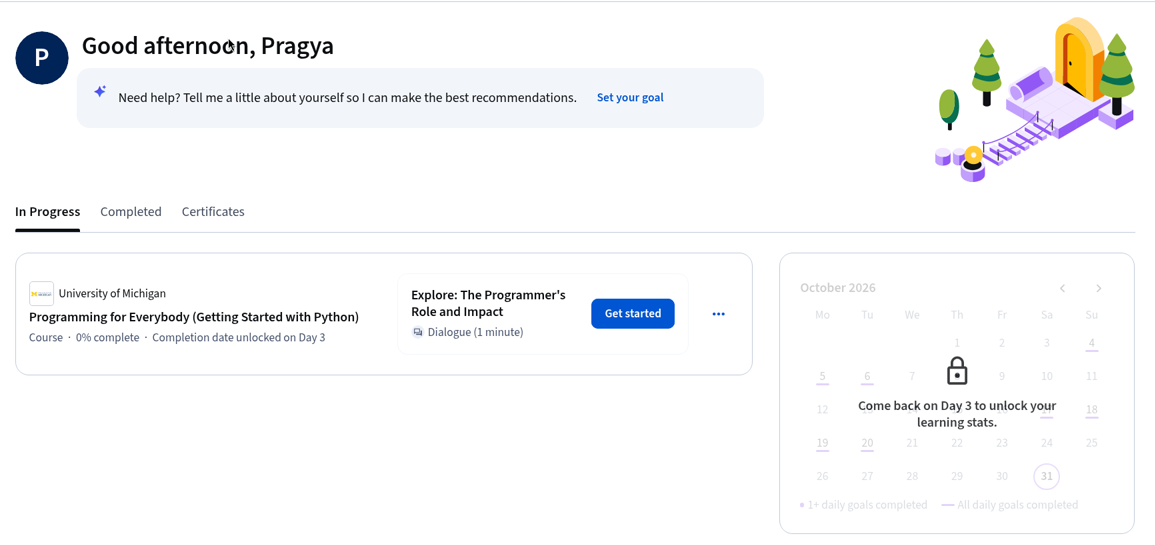
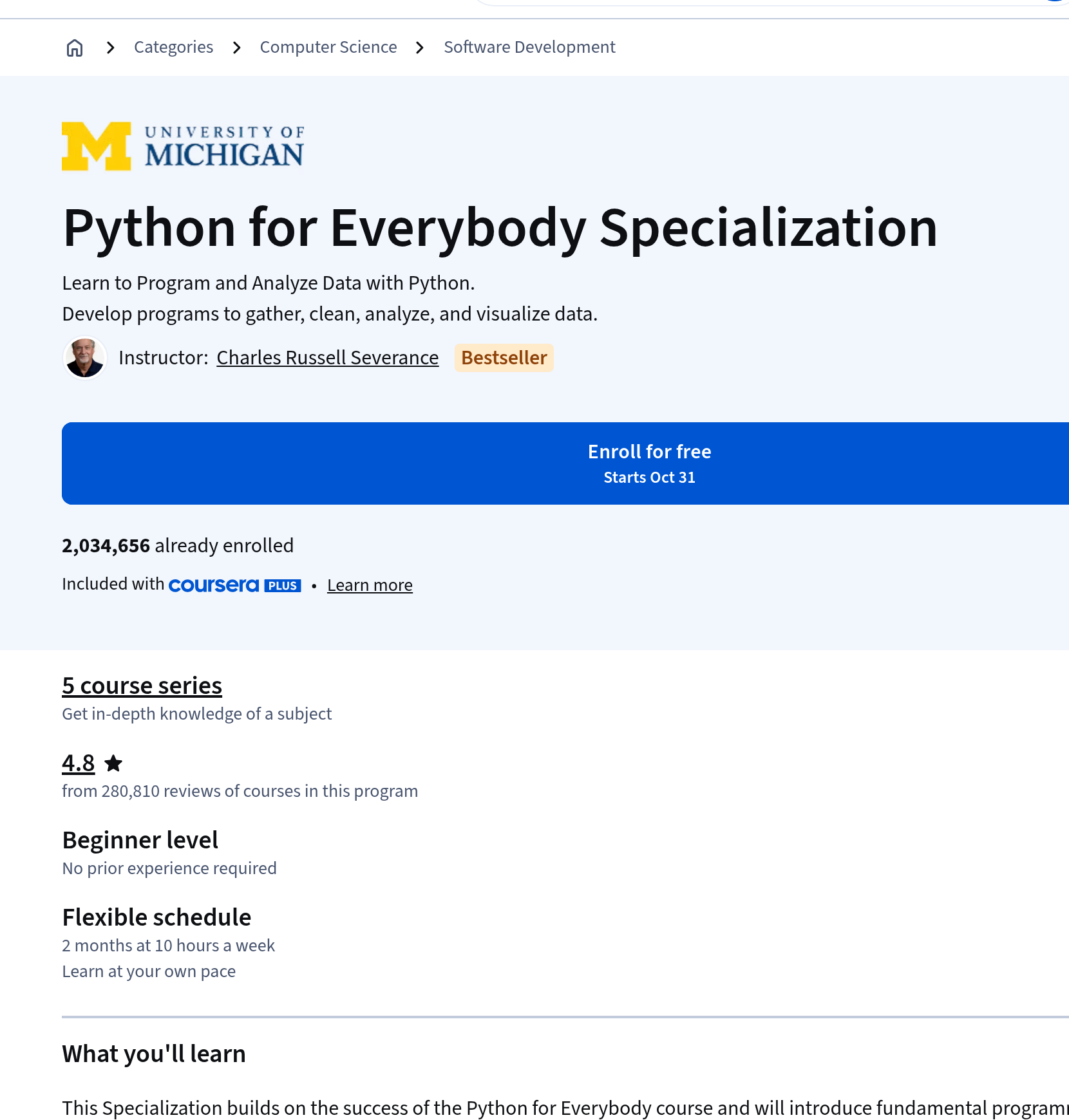
For this review I created a free Coursera account, opened the free preview of module 1 in the University of Michigan’s Programming for Everybody (Getting Started with Python), watched the opening lecture and asked Coursera Coach a question about the course. I haven’t finished the course. Everything beyond that hands-on check comes from Coursera’s official course pages, pricing pages and terms, its published learner ratings and the experiences learners repeatedly document in public reviews, all checked in October 2026. I give Coursera an editorial score of 4.1 out of 5, and the scoring table further down shows exactly where that number comes from.
- Price
- Coursera Plus $59/month or $399/year
- Free option
- First-module preview of most courses
- Partners
- 375+ universities and companies
- Best for
- Career certificates and degree-level study
See Coursera Plus plans Opens coursera.org
- Coursera Plus runs $59 monthly or $399 for a full year. It includes more than nine in ten courses and most Professional Certificates. Degrees cost extra.
- Free audit is gone. Since August 2025, most courses let you preview the first module free. Financial aid is still available.
- The seven-month rule: if you’ll subscribe for seven months or more, the annual plan is cheaper than paying monthly.
- Annual refunds have a short window. Cancel within 14 days of buying a yearly plan, and renewals aren’t refunded.
- Coursera now owns Udemy, but as of October 2026 the two sites still sell separately.
What Coursera Is in 2026 (and What Changed This Year)
Coursera is an online learning platform where universities and companies publish courses, certificates and full degrees. Andrew Ng and Daphne Koller founded it in 2012, and its about page now lists more than 375 university and company partners. That partner list is the whole point of Coursera. You’re learning from the University of Michigan, Stanford, Google, IBM or Meta, not from an independent instructor you’ve never heard of.
Three changes matter if you last looked at Coursera a couple of years ago:
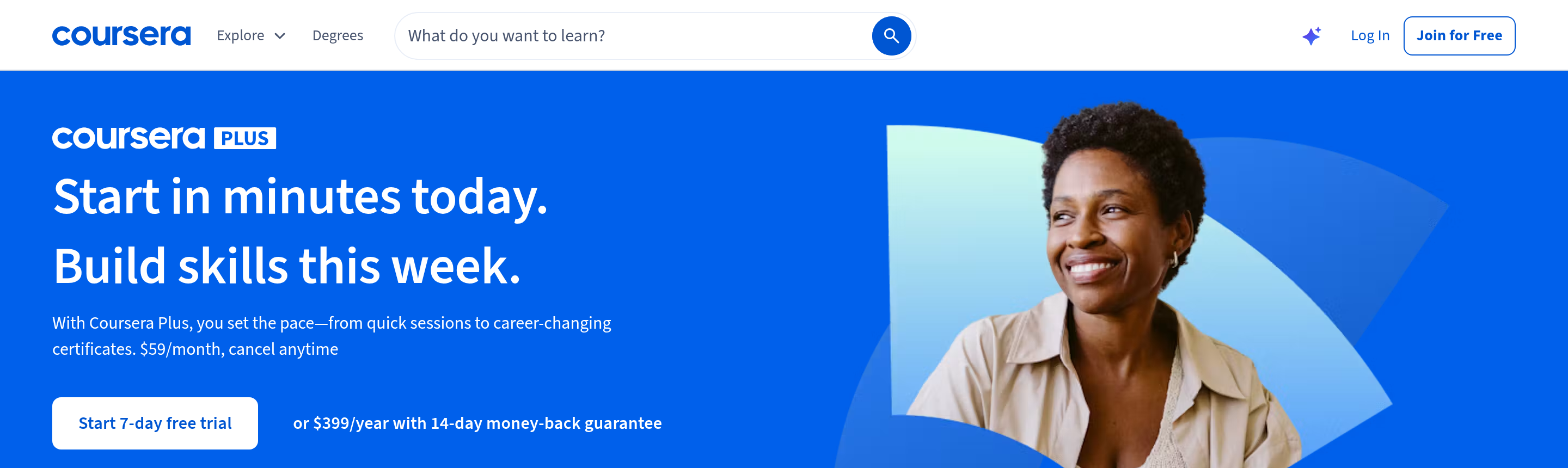
- Free audit ended. In August 2025, Coursera replaced the old audit option with a course preview that opens the first module of a course for free. Past that point, you need to pay or apply for financial aid.
- Coursera bought Udemy. The deal was completed in May 2026, according to Coursera’s SEC filing. For now you still sign up, pay and get certificates on each site separately.
- AI help is built in. Coursera Coach, the platform’s AI tutor, answers questions about course material, quizzes you and explains concepts you’re missing. Coursera says it has helped more than one million learners.
I saw this change first-hand. When I signed up and added Programming for Everybody, Coursera offered no free audit option, only a 7-day free trial plus free preview access to module 1.
The business is big and stable, which matters when you’re buying a year of access. In its second-quarter 2026 earnings release, its first full quarter including Udemy, Coursera reported $298.6 million in revenue and about 1.66 million paid subscribers.
Coursera Pricing: Every Way to Pay
Coursera has five ways to pay, and the right one depends on how many courses you’ll take and how fast. Here’s each option with the price Coursera lists in the US:
| Option | Price | What it covers |
|---|---|---|
| Course preview | Free | The first module of most courses, with no certificate |
| Single course or certificate subscription | Varies, e.g. $49/month | One course or program, for as long as you keep paying |
| Coursera Plus monthly | $59/month | Over 90% of courses, Specializations and Professional Certificates |
| Coursera Plus annual | $399/year | The same catalog, billed once a year |
| Online degrees | About $19,840 to $27,288 (examples below) | Accredited bachelor’s and master’s programs, priced separately |
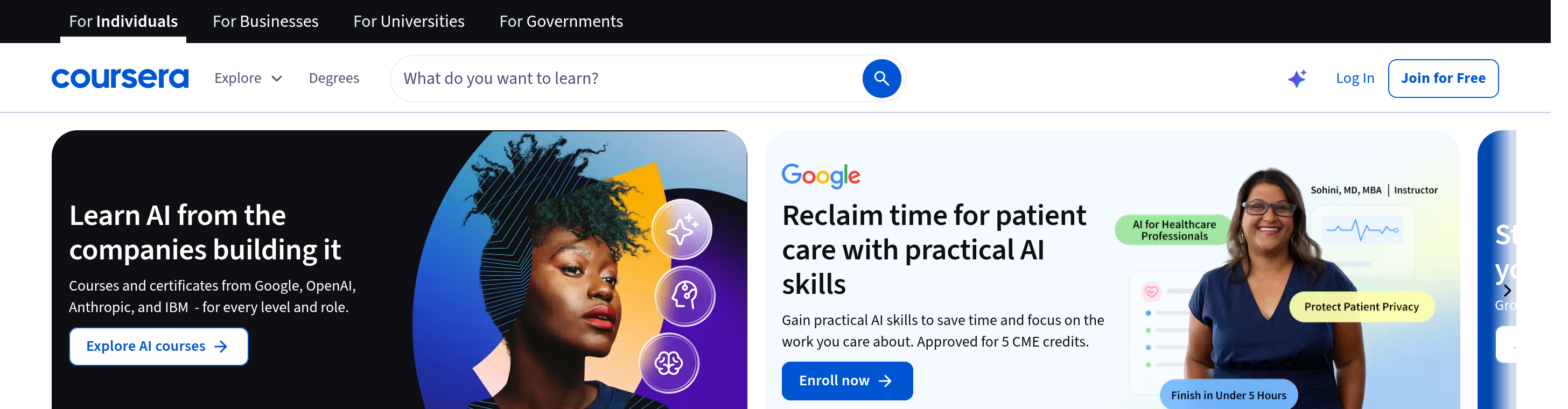
The Coursera Plus page says the subscription opens up more than 10,000 courses, guided projects, Specializations and Professional Certificates, and advertises a 7-day free trial on the monthly plan. Coursera’s terms now say trials vary by subscription and appear at checkout, so check the offer on your screen before you start one.
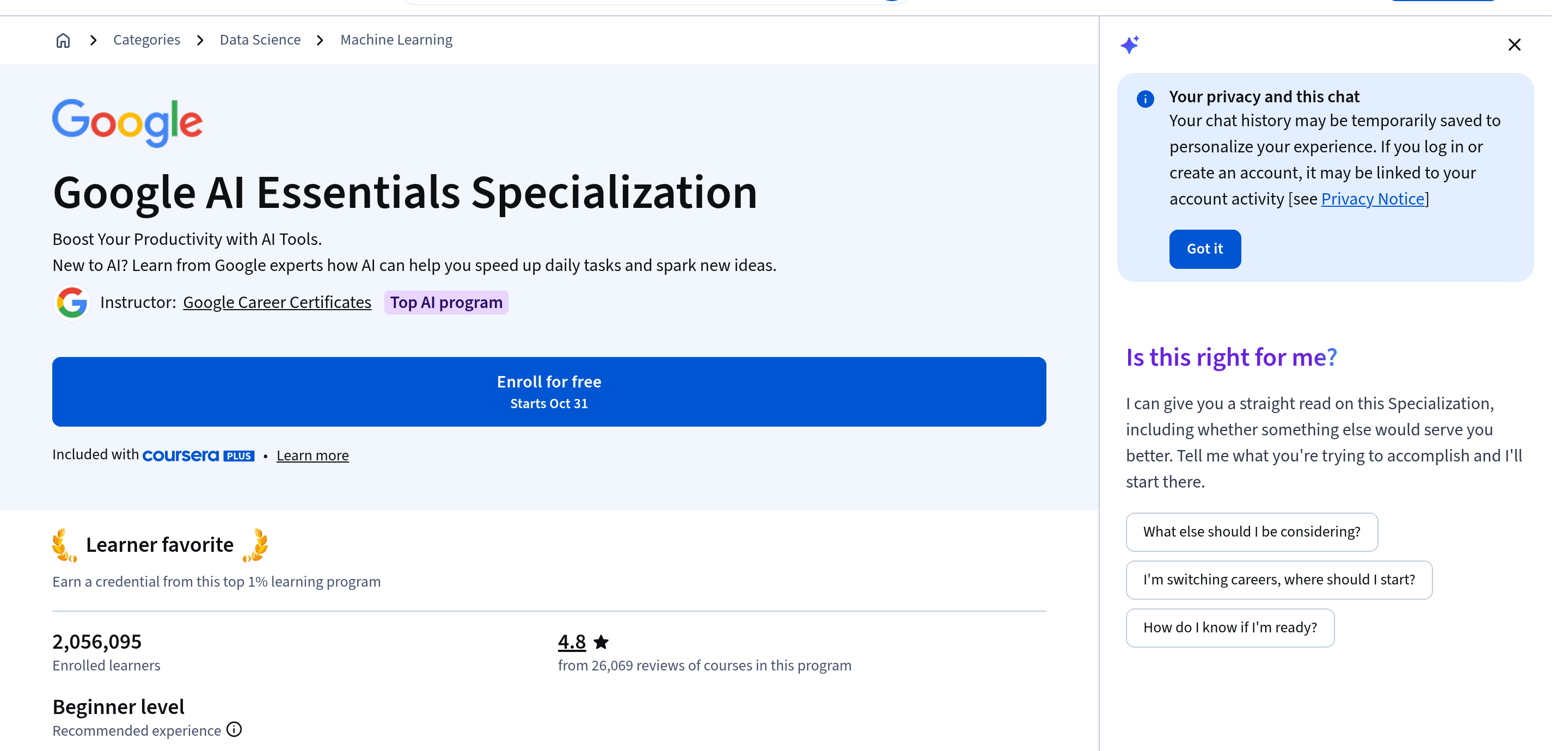
The $49 a month figure is what Coursera lists in the US for Google AI Essentials, a short course rated 4.8 by about 26,000 learners. Other single programs list their own monthly prices, so compare the program’s price against $59 for Plus before you subscribe. If you plan to take even a second course, Plus usually wins.
Degrees are a different purchase. The University of Illinois Master of Computer Science on Coursera lists a total cost of $19,840 to $25,376, and the Illinois iMBA lists $27,288, or $379 per credit. Coursera Plus doesn’t cover either.
Compare Coursera Plus plans Browse online degrees
What a Coursera Certificate Really Costs, by Goal
The sticker price doesn’t tell you what you’ll spend, because Coursera charges by time and you decide the pace. So I worked out the real cost for five common goals using the hours Coursera lists and its current Plus prices. Monthly costs assume you pay $59 for each month, or part of a month, that you’re studying.
| Your goal | Example | Light pace (5 hrs/week) | Steady pace (10 hrs/week) | Cheapest way to pay |
|---|---|---|---|---|
| See if a subject suits you | Any course’s first module | One evening | One evening | $0 |
| Finish one short course | Google AI Essentials, under 10 hours | About 2 weeks, 1 payment | About 1 week, 1 payment | $49 |
| Learn to code from zero | Python for Everybody (79 hours listed) | About 16 weeks, 4 payments ($236) | About 8 weeks, 2 payments ($118) | $118 to $236 monthly |
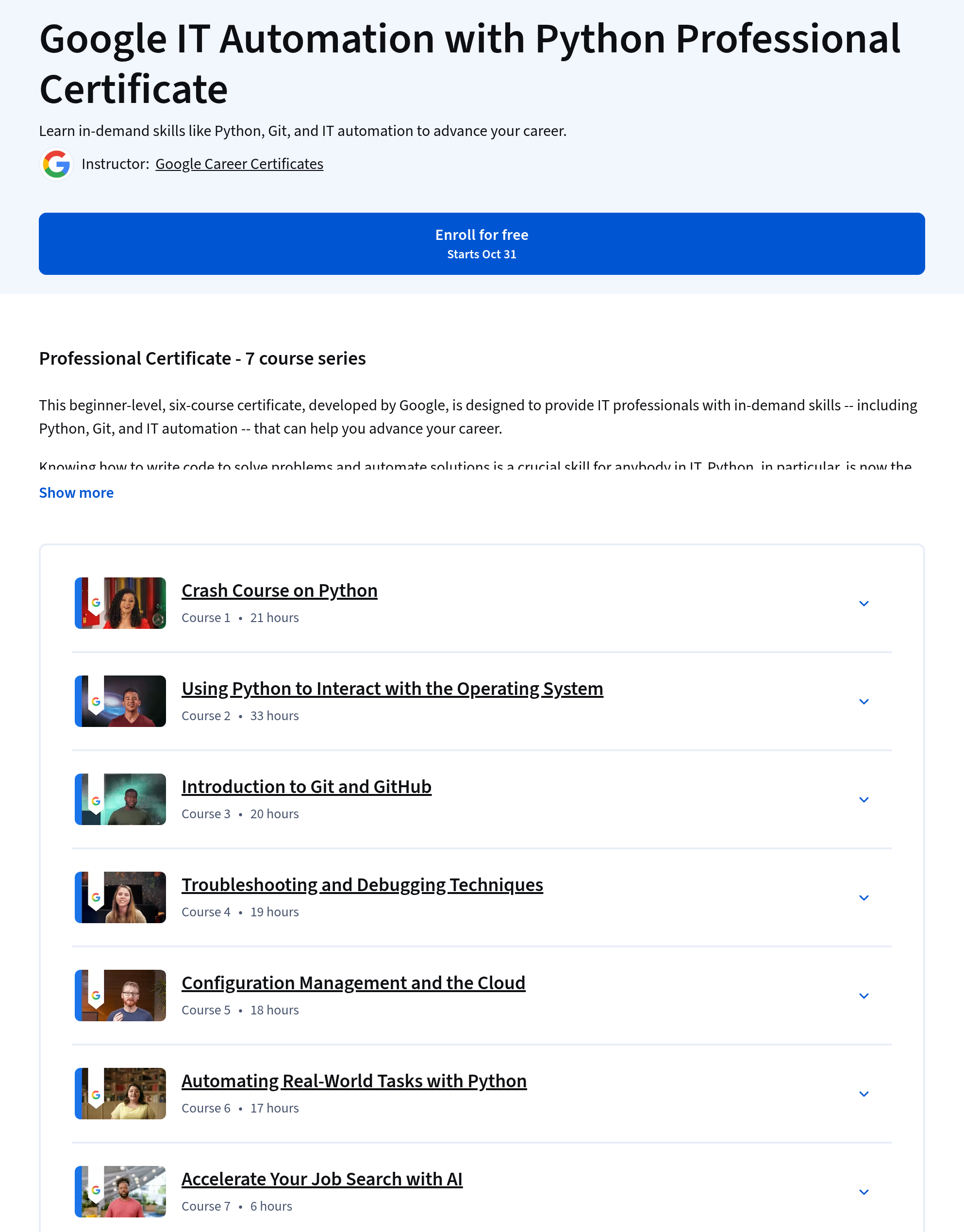
| Earn a job-focused certificate | Google IT Automation with Python (134 hours listed) | About 27 weeks, 7 payments ($413) | About 14 weeks, 4 payments ($236) | $399 annual or $236 monthly |
| Stack two certificates in a year | Any two Professional Certificates | Most of a year | About 6 to 8 months | $399 annual |
Two things jump out. First, the slow learner pays more. Doubling your pace on the Google certificate cuts the cost from $413 to $236, so a few focused weeks are worth more than a long, casual plan. Second, the annual plan only pays off once you’d otherwise make seven monthly payments. Six months of Plus costs $354, which is less than $399. Seven months costs $413, which is more.
That’s the seven-month rule. If you’re unsure you’ll study for seven months, start monthly. You can switch to annual later, once you know the habit sticks.
Monthly or Annual: Picking Your Coursera Plus Plan
Monthly Coursera Plus is the safer choice for most first-time subscribers, and annual is the better deal for anyone with a long goal. Here’s how to tell which one you are:
You want one certificate and can study 10 or more hours a week
Pay monthly and cancel the day you finish. Most single certificates fit inside four payments at that pace.
You’re changing careers and plan to stack several certificates
Go annual. You’ll pass seven months of study easily, and the $399 price caps your cost for the year.
You’re not sure you’ll keep going after a month
Use the free preview first, then try monthly. Don’t buy a year of anything you haven’t used for a few weeks.
You can’t afford either plan right now
Apply for financial aid on the course page. Coursera still offers it for eligible learners.
One warning on annual plans. Coursera’s terms give you 14 days to cancel a new annual subscription for a refund, and they don’t refund annual renewal charges. Canceling also doesn’t trigger a refund on its own, so you need to request one. Put a reminder in your calendar a few days before the renewal date.
What You Get Inside a Coursera Course
A typical Coursera course is a set of weekly modules with short video lectures, readings, practice quizzes and graded assignments. Most are self-paced with suggested deadlines you can reset. The bigger programs stack these courses together:
- Guided Projects are short, hands-on tasks you finish in a single sitting, often in a split-screen workspace.
- Specializations are a series of related courses from one partner, such as the University of Michigan’s Python for Everybody.
- Professional Certificates are job-focused programs from companies such as Google, IBM and Meta, aimed at entry-level roles.
- Degrees are full accredited programs with admissions, credit hours and tuition.
The best courses have huge, happy audiences. The Coursera course pages show the Machine Learning Specialization at 4.9 stars from about 39,000 ratings, AI for Everyone at 4.8 from about 53,000, and Google IT Automation with Python at 4.8 from about 56,000. Those are strong numbers at that scale.
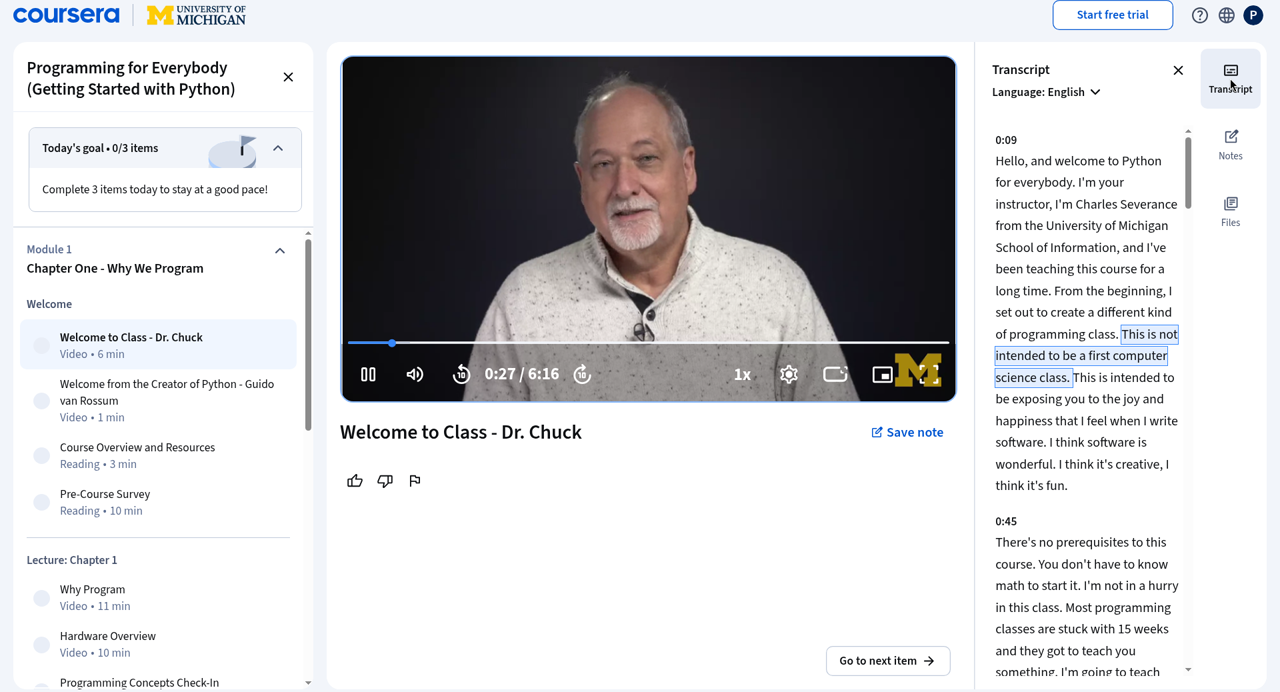
In the preview, the opening lecture of Programming for Everybody played in full, with an interactive transcript beside the video and the rest of module 1 listed on the left.
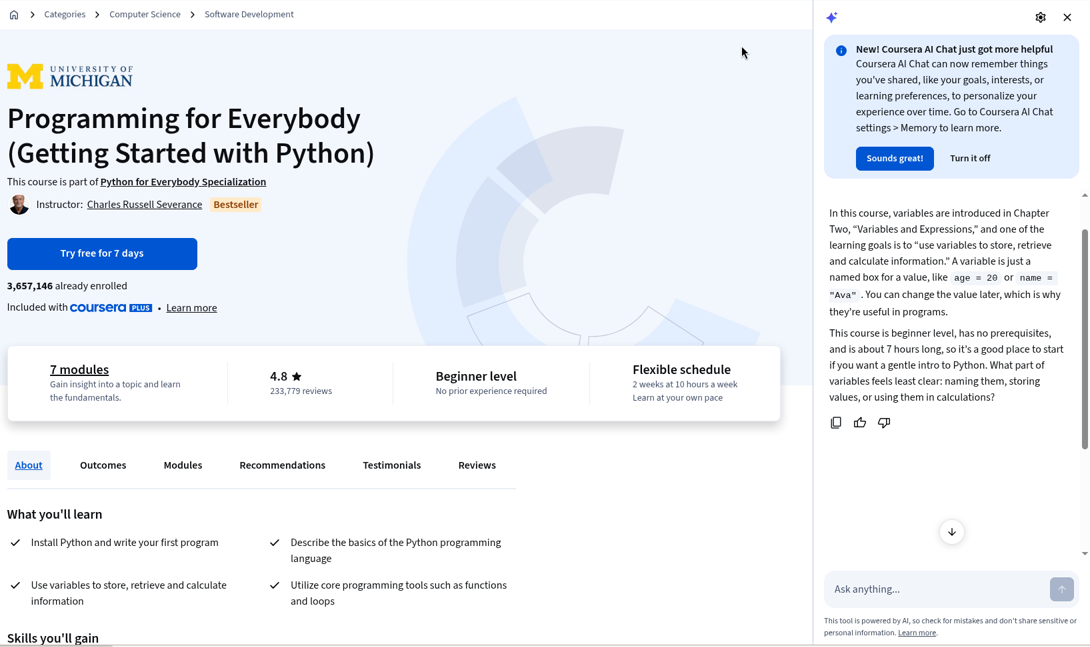
Coursera Coach sits inside the course player. You can ask it to explain a concept from the lecture, quiz you before a graded test or connect the topic to real jobs. Coursera’s own data says learners who use it complete 11.6% more course items per hour on average. It’s a company figure, but the feature fills a real gap in a platform where human instructors rarely answer questions.
When I asked Coach a question in the preview, it answered in plain language, named the chapter that covers the topic and asked a follow-up question to check what I was unsure about.
The mobile app holds up too. On the US App Store, the Coursera app has a 4.8 rating from about 112,600 ratings, and paid learners can download lectures to watch offline.
What Learners Praise and Complain About
Across public reviews, the same few themes keep coming up. On the positive side, learners praise the instructors, the brand names on the certificates and the structure of the long programs. Python for Everybody and Andrew Ng’s machine learning courses get mentioned again and again as the courses that finally made a subject click.
The complaints are just as consistent:
- Price creep. People who joined when audit was free feel the paywall more than new learners do. Losing free audit is the most common gripe in 2025 and 2026 reviews.
- Peer grading. Some assignments are marked by other learners, and reviewers report slow or uneven grades that hold up their progress.
- Billing surprises. Many negative reviews come from people charged after a trial or an annual renewal. That’s a reason to set reminders, not a reason to avoid Coursera.
- Uneven freshness. Learners also note that some older Specializations haven’t been updated in a while. Check a course’s recent reviews before you start it.
Coursera Pros and Cons
Pros
- Courses and certificates from 375+ well-known universities and companies
- Professional Certificates from Google, IBM and Meta are recognizable on a resume
- Coursera Plus covers most of the catalog for one flat price
- Real accredited degrees for a fraction of typical campus tuition
- Financial aid for learners who qualify
- Highly rated app with offline downloads and an AI tutor
Cons
- Free audit replaced by a one-module preview
- Pricing differs by course, program and plan, which makes comparison harder
- Access ends when you stop paying; there’s no lifetime ownership
- Annual plans have a short refund window and no renewal refunds
- Peer-graded assignments can be slow
Who Coursera Suits, and Who Should Skip It
Coursera is a strong fit for career changers who need a credential an employer will recognize, people preparing for a graduate degree who want to test the subject first, and professionals whose employer will reimburse a certificate. It’s also a good fit for anyone who likes structure. The deadlines, graded work and long programs keep you moving in a way a loose video library doesn’t.
You should probably skip Coursera if you want to learn one specific tool quickly, like a new spreadsheet function or a single framework. A cheap single course elsewhere will get you there faster. Skip it, too, if you study in short bursts with long gaps. You’ll pay for months you don’t use. And if you only want free lectures, the free preview won’t take you far anymore.
Coursera Review Score: How the 4.1 Breaks Down
Here’s how I scored Coursera. Each category is weighted by how much it matters to a typical paying learner, and every score is based on published prices, policies and learner ratings.
| Category | Weight | Score | Why |
|---|---|---|---|
| Course quality and instructors | 25% | 4.6 | Top university and company partners; flagship courses rated 4.8 to 4.9 |
| Value for money | 25% | 4.0 | Fair if you study steadily; costly if you drift |
| Certificate value | 20% | 4.5 | Recognizable partner names; degrees are accredited |
| Free access | 10% | 3.0 | First-module preview only, plus financial aid |
| Pricing clarity and refunds | 10% | 3.2 | Several price types; strict annual refund window |
| App and learning tools | 10% | 4.4 | 4.8 App Store rating, offline video and an AI tutor |
| Overall | 100% | 4.1 | Weighted average, rounded |
The score would sit closer to 4.5 if free audit came back. The content is as good as ever. What dropped is how much of it you can reach without paying.
Coursera Alternatives Worth a Look
Coursera isn’t the only option, and for some goals it isn’t the best one:
- Udemy is best for learning a specific tool cheaply. Courses go on sale from $12.99 and you keep lifetime access, though its certificates carry less weight. It’s now owned by Coursera but sold separately.
- edX also hosts university courses, including Harvard’s free CS50 series, with paid certificates if you want proof.
- freeCodeCamp is completely free for web development and Python, with free certifications based on projects.
- Khan Academy is free and excellent for math, science and test prep at the foundation level.
- MasterClass costs $120 to $240 a year and is built for inspiration from famous names, not career credentials.
Browse Coursera courses Compare with Udemy
Coursera Review FAQs
Is Coursera legit?
Yes. Coursera is a publicly traded company founded in 2012, and its courses come from more than 375 universities and companies. Its degrees are awarded by the partner universities themselves.
Can you still take Coursera courses for free?
Partly. Since August 2025, most courses let you preview the first module free instead of auditing the whole course. If you qualify, financial aid opens the whole course, graded work included, along with its certificate.
Are Coursera certificates worth it?
Professional Certificates from companies like Google and IBM are worth it for entry-level job seekers, because employers recognize the names. A certificate works best next to projects you can show. On its own, it won’t guarantee interviews.
How much is Coursera per month?
The monthly Coursera Plus plan is $59. Paying for a year up front brings it to $399. Some single courses and programs have their own subscription price, such as $49 a month. Degrees are priced separately.
Can you get a refund from Coursera?
For annual subscriptions, Coursera’s terms allow a refund if you cancel within 14 days of purchase, and renewals aren’t refunded. Canceling doesn’t refund you automatically, so request the refund through Coursera’s help center.
Bottom Line: Who Coursera Is Worth Paying For
Coursera is worth paying for if you want a credential with a recognizable name on it and you can commit to a steady weekly pace. Start with the free preview, then pay monthly while you test the habit. Switch to the $399 annual plan only once you’re sure you’ll study for seven months or more.
If you mostly want to learn one tool fast or browse lectures for free, look at Udemy or the free options above instead. Coursera’s strength is structured, career-focused study, and that’s where your money goes furthest.
You reached the last module. 3 in 100 do.
Up next for Coursera:
ComparisonCoursera vs Udemy